Part 3: Community Park & Recreation
Unfortunately, council minutes are missing between September 1971 and August 1972. During this time, it is evident that there was discission regarding the future use of the recreation center. This is indicated by a resolution signed by Mayor Troy Phillips on October 6, 1972. The resolution allowed the town to enter into an agreement with the Alabama Department of Conservation and Natural Resources in the development of “Altoona Park.”[1] Councilman Dennis Burton made the motion to pass the resolution, with a second by Councilman Butch Davis. The full council, including Burton, Davis, Howard McCray, John Gibbs, and Bill Chaviers all voted in favor, and the motion passed.
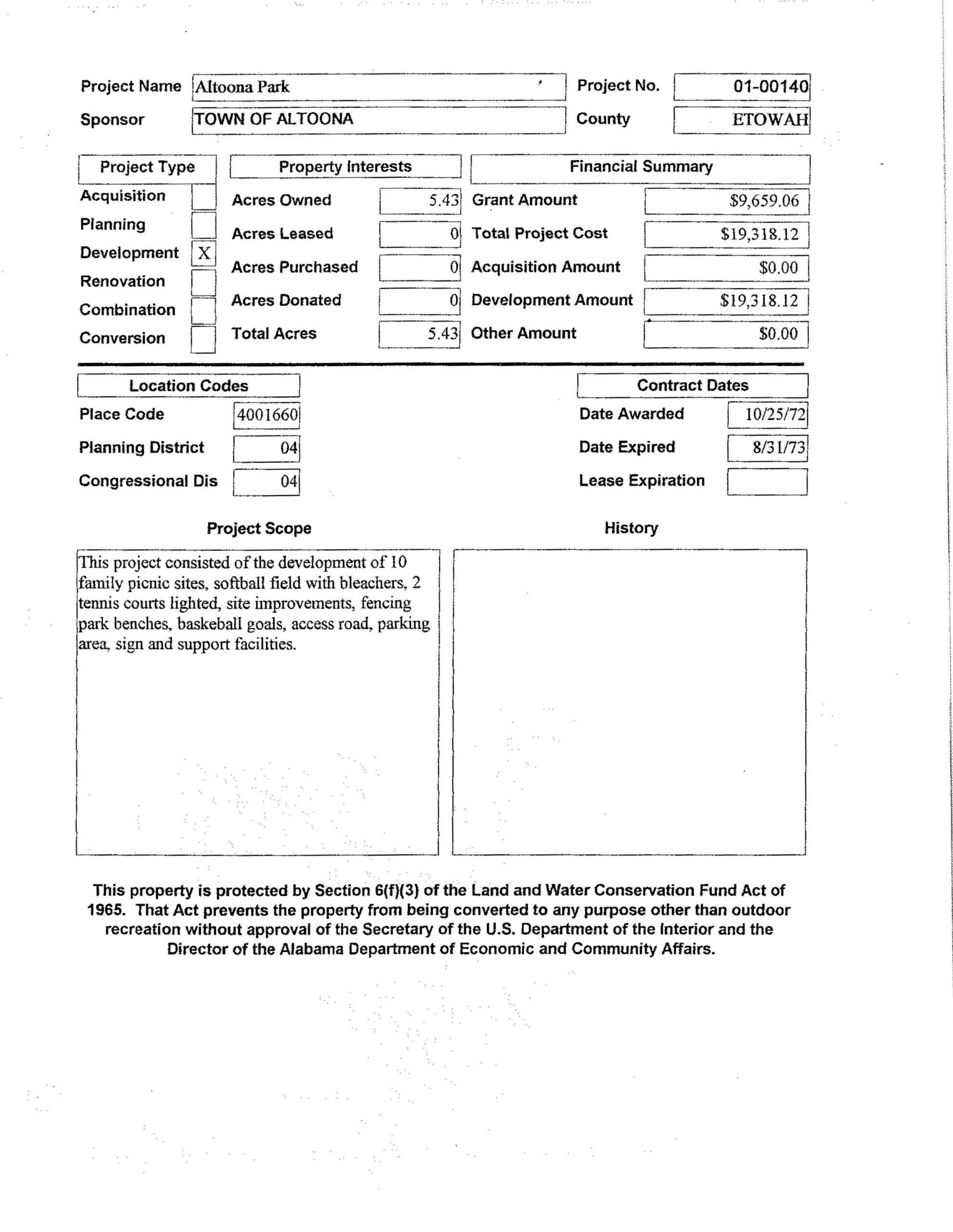
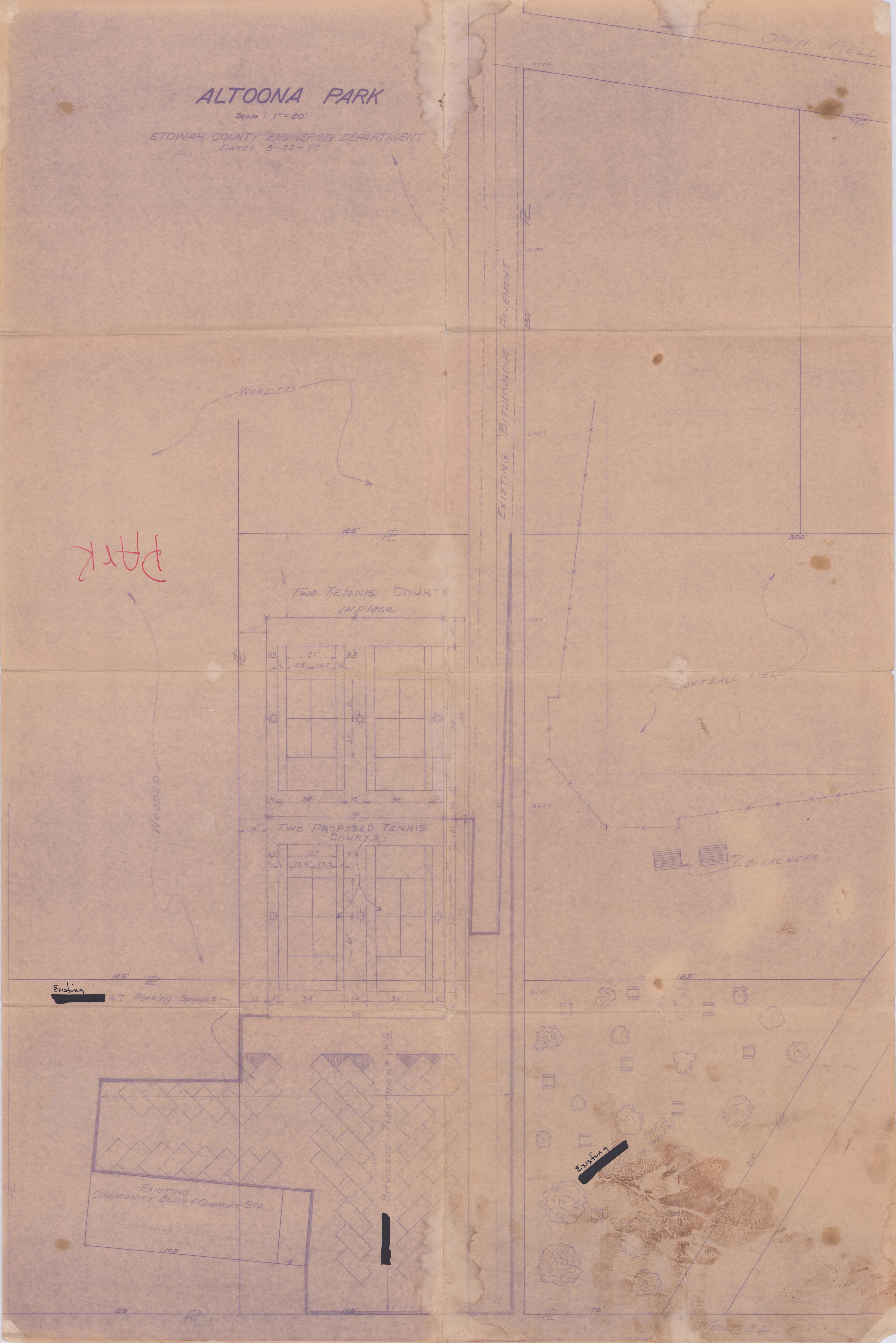
This agreement ultimately led to the park being developed under a Land and Water Conservation Fund grant award of $9,659.06.[2] The scope of the project included adding the two lighted tennis courts that exist today. Also included in the grant were ten picnic tables among the trees where the pavilions are now located. The main part of the grant was to convert the football field into a softball field. At the closeout of the grant in August 1973, the softball field was complete with home plate was situated near the current right field foul pole.[3] The recreation center parking lot was paved with asphalt and featured 47 parking spaces. The drawings also show future plans, including constructing an additional court where the basketball court is now situated.
These development at the park was not without discussion of the recreation building.[4] A motion was presented by councilman Davis to discontinue dances at the facility. A second motion by Davis also asked for a gate to be installed to restrict entry. A third motion, again by Davis, instituted a $25 cleanup fee to be paid by each renter. All three motions were passed unanimously. In October 1973, the council made an additional motion to disallow recreation building rentals from charging an admission fee.[5]
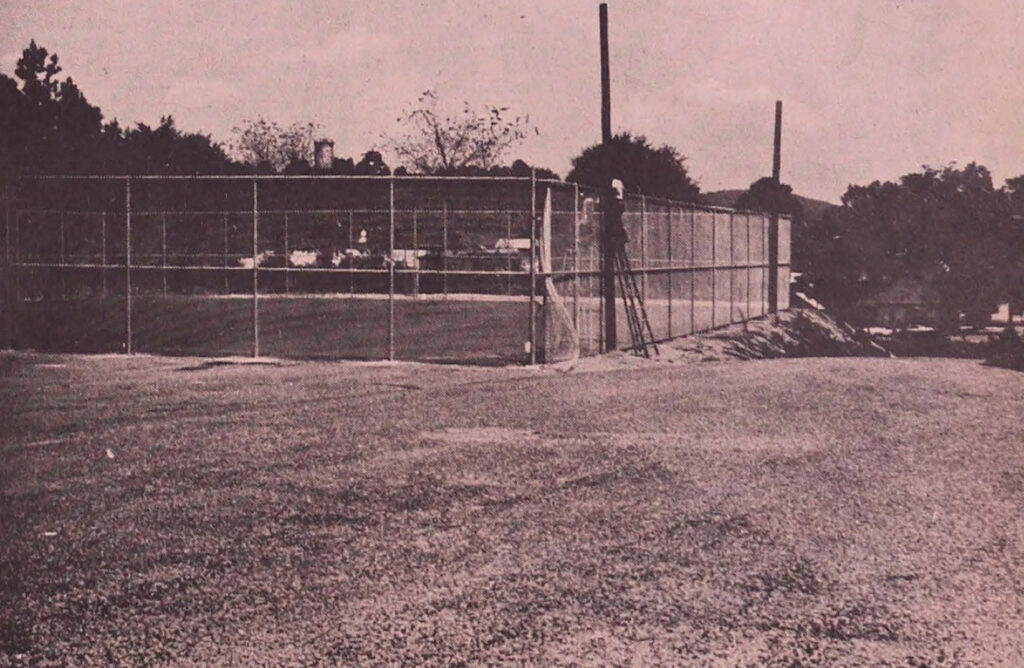
By June 4, 1973, more funding was needed for the park, and the council authorized Mayor Phillips to borrow $10,000 for park construction.[6] In August, Brent Clifton was appointed park director.[7] The extent of his duties and job description are unknown. The following month the council was informed that at least part of the park construction was complete.[8] At that September meeting the council authorized the mayor to erect a sign at the court stating, “No Alcoholic Beverages Allowed.” Later in October, the council voted to have the lights cutoff at the tennis courts at 5P.M. on Sunday and 9P.M. on weekdays. By March 1974, the light situation came up again, and the council voted for a coin meter to be installed to defer the cost of running the lights.[9] The council also took up the proposition of constructing the two additional tennis courts and authorized the clerk to contact EAPA to gather information[10]
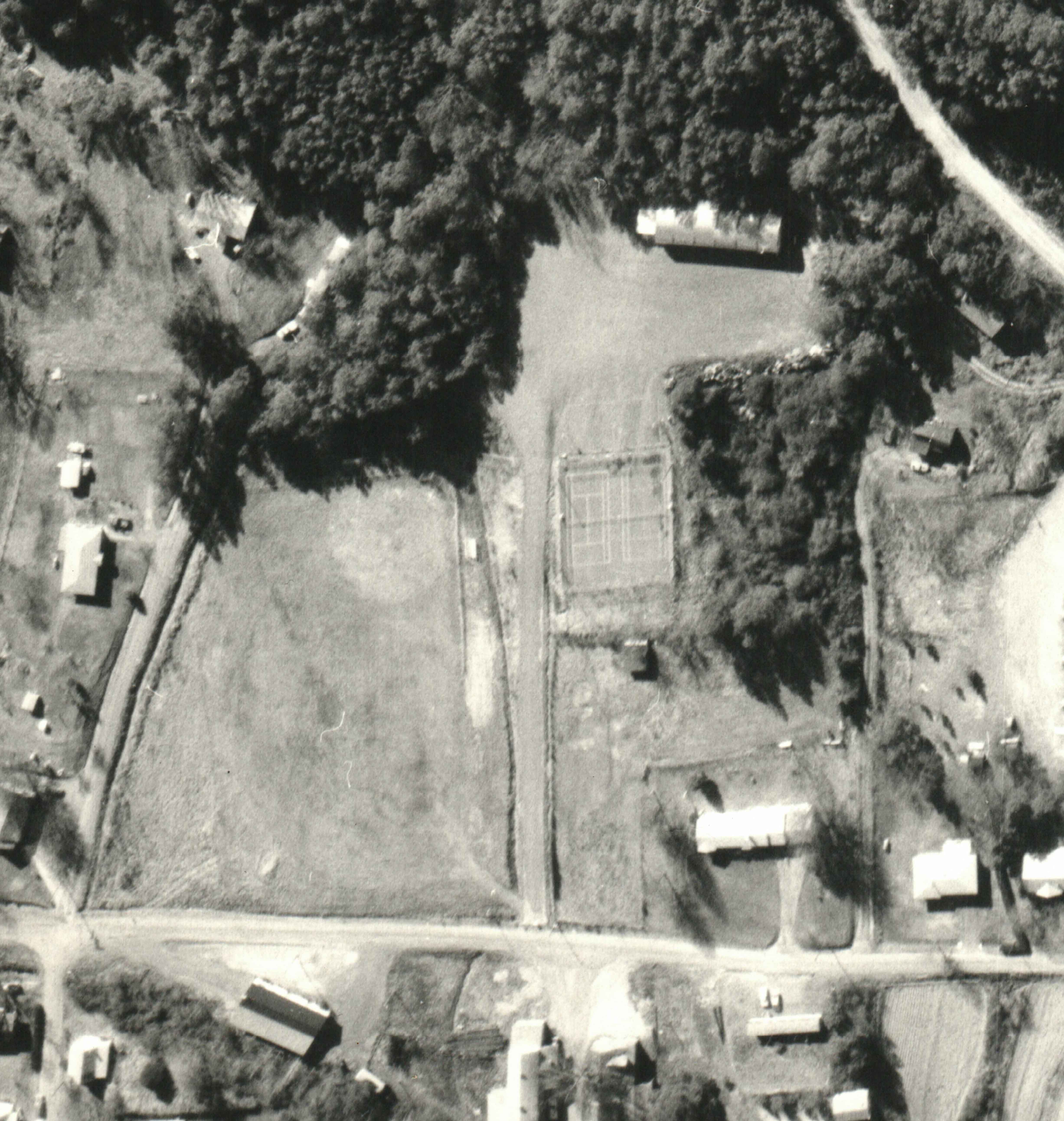
The Park continued to be a staple for community events during this time. A local saddle club was one notable user of the park facilities.[11] A 1975 aerial photo shows the completion of the 1972 grant with the football field fully transformed into a softball field. This photo also shows what looks like a small basketball court just north of the current tennis courts, in the area that the basketball court exists today. The conversion to a softball field (and probable location of home plate) led to parking issues at the park. An attempted remedy was proposed by the council in August 1974, when “No parking” signs were to be erected at the park.[12] An additional issue at the park was drinking. While the tennis court had signs in place, the park lacked any signage regarding alcoholic beverages. This was resolved in September, when the council added signage for the remainder of the park.
In the same meeting, the park committee also held discussion about sealing the tennis courts. The recorded cost of the project was to be $901 plus labor. No action was recorded, so it is unknown if the council proceeded with sealing the courts. This may be due to the proposed addition of two additional courts. That proposal turned to action less than a month later, when the council voted to construct two additional courts.[13] In November, a $250 bid was accepted to paint the recreation building.[14] By March 1975, construction on the two additional tennis courts had not begun. That month, the council passed a second resolution to begin construction on the courts.[15] The following month councilman Jerry Morgan was authorized to begin work at the park, with the stipulation the work must be completed in 90 days. The minutes do not record if this work was related to the construction of the two tennis courts or another project.
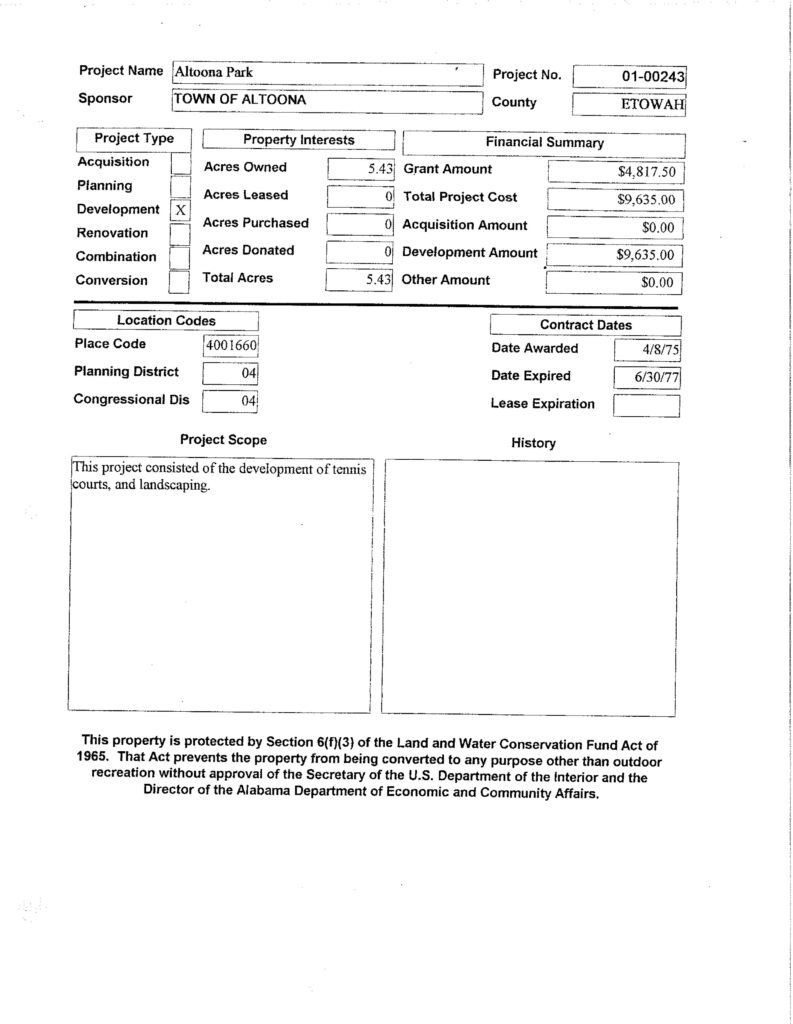
On June 2, 1975, the town council authorized Mayor Butch Davis to enter into a second agreement with the Alabama Department of Conservation and Natural Resources regarding a project at Altoona Park.[16] Like the last agreement, this included a second grant from the LWCF. This time in the amount of $4,817.50.[17] This second grant included funding for the development of tennis courts and landscaping. This grant ultimately constructed the two additional tennis courts where the basketball courts are located today. In July 1975, the council voted to close the park gate at 11P.M. each night.[18] In the same meeting, it was discussed to explore the possibility of adding a swimming pool at the park. In September, a need for additional fencing at the park was also brought before the council. This fencing was to be installed by Dixie fence for a cost of $3290. The issue of lights at the tennis court once again became a topic of discussion in November 1975, when it was ordered for the clerk to call have power cut off.
Snead State Community College utilized the courts in 1976 for local tennis lessons.[19] Snead State’s investment in Altoona also extended to the recreation building, where they were tasked in developing a senior citizen program for the town. The Jaycees also used the ballfield and recreational building.[20] The ballfield was utilized by the local little league team as well. Other uses for the park and field included band camp and tennis tournaments. The recreation building hosted “skate nights.” However, when it was discovered that the town may be held responsible for accidents, all skating activities were ended.[21] This was met with a large outcry from residents. After consulting with the town attorney, skating resumed when participants were asked to sign waivers.
The heavy use of the park led the council to purchase playground used equipment from West End Elementary for a cost of $300. By 1977, the Jaycees continued use of the ballfield led the group to erect fencing in the left field area and assemble the playground equipment purchased from the elementary school. The need for bathrooms at the park was also discussed during this time.[22] Mayor Davis suggested that the town purchase the materials and the Jaycees be responsible for the construction. In the end the council decided to see how much of the materials the Jaycees could get donated, and the town would pay for the rest.
By late-1976, the need for a recreation program was discussed. Recreation chairman Dennis Burton was asked to investigate. In February 1977, the entire council indicated the need to move forward with a community recreation program, headed by Phillip McAfee.[23] At this time, several different organizations were using the ballfield including the Jaycees, little league, and the West End High School baseball team. Phillip McAfee was commended by the council for managing the rotating schedules of each league, allowing the field to see its full potential.[24]
In the fall of 1976, Councilman Burton was asked to investigate sealing the tennis courts and partitioning off the basketball goals. Since the construction of the additional tennis courts would have destroyed the original basketball court, the inclusion of a new court may have been added to the second agreement between the town and the Alabama Department of Conservation and Natural Resources. A June 1977 council meeting suggests that the additional tennis courts were constructed as both a tennis and basketball court.[25] The discussion of that meeting revolved around moving the basketball goals, as the cost for fencing was too high, and that it would confine the out of bounds space to a small area. In the end Councilman Burton asked for consideration to move the basketball goal out of the tennis court area completely.
Due to another gap in council minutes the park activities for the years of 1978 to 1980 are unknown. Beginning in 1981, the tennis courts were once again due to be resealed and the town was working on a grant for a swimming pool. This was the last mention of a potential pool on the site, as either the funding was unavailable, or the liability of the pool was too big of a burden.
By 1985, there was discussion of establishing a recreation program.[26] At some point between 1977 and 1981, Phillip McAfee left as director of the park & rec program and the role was never filled. While the resulting discussion did not result in a revival of the program, a park and recreation account was established for the first time.
At the same time, the town was awarded their third LWCF grant, totaling $6,0101.68[27]. The Park was in bad need of repair, as the fencing around the ball field was sold for $1000, and light poles were removed due to rot.[28] The lights and bleachers were still in possession of the town but reported to be in poor condition. There were issues at the tennis courts as well. As a pre-requisite for the grant, all wiring would have to be buried underground. By October all conditions were met, and Mayor Jerry Morgan made the motion to award the contract to LADD engineering. Aaron Hutches seconded and the council unanimously approved.[29]
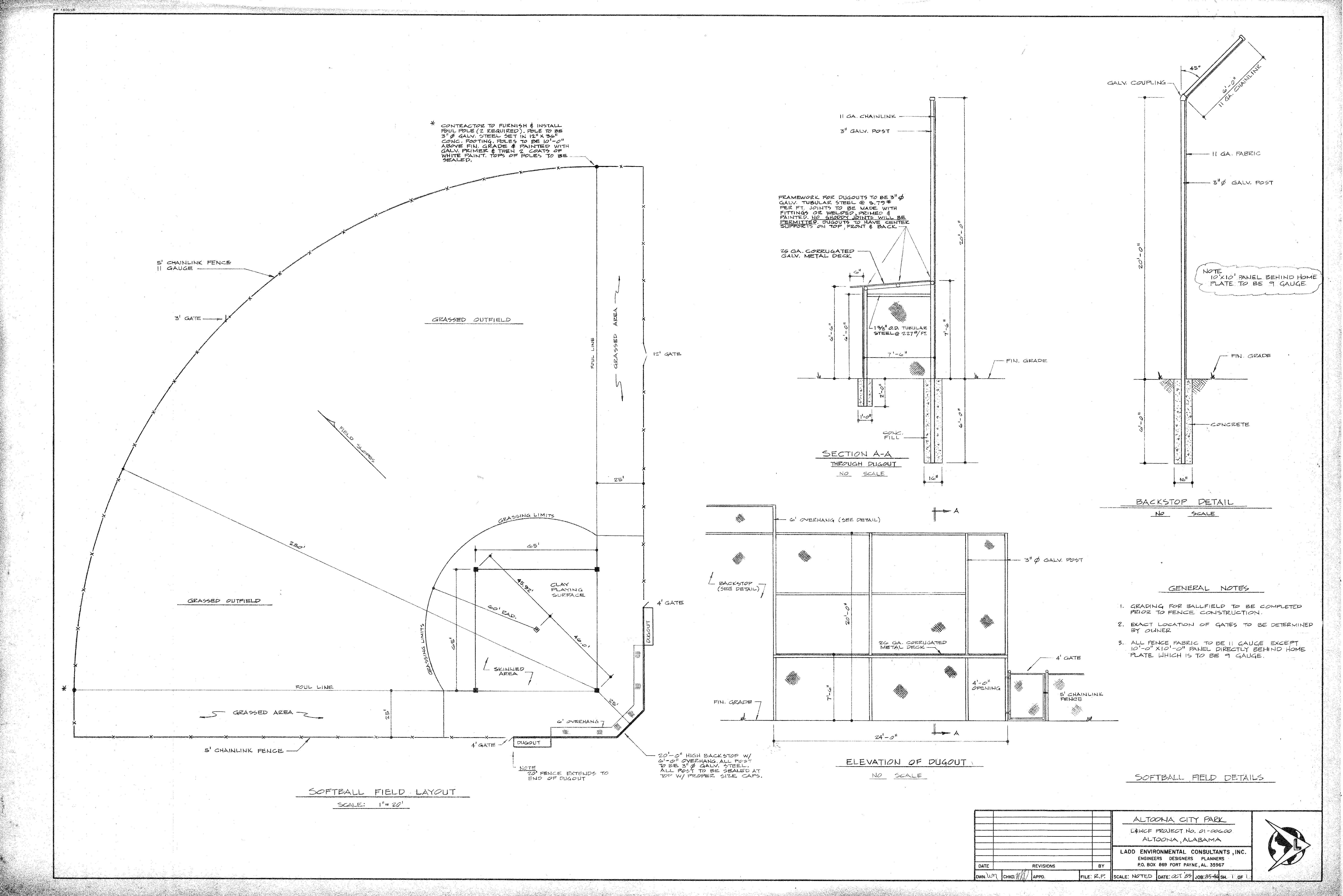
As a part of this renovation, the tennis courts were resurfaced and the ballfield was completely refurbished. Ed Clevenger graded the field, while Keith Willis and James Livingston were both mentioned as discing the field.[30] Siberton Fence company received the bid for fencing the field, including the backstop and dugouts. The playing field was installed by Tim Mayo and Jimmy Garrard. Clyde Jenkins recommended to the council that the field be sprigged with Bermuda grass.
By the end of 1986, the field renovations were coming to an end. Jon Strickland, from the Department of Conservation and Natural Resources came to inspect the field. Betty Snead also discussed with the council about starting a recreational softball league. In early 1987, the town was approached by the West End High School girls’ softball team to use the field for their home game.[31] When Mr. Strickland came to inspect the property, he found several small issues. These were quickly remedied by Councilman Alfred Sartin and work order inmates from St. Clair prison. Upon Mr. Strickland’s second inspection of the property, he asked that access from 7th Avenue and an access trail from the wooded park area (which included swings and picnic tables) to the ballfield be added. It was also discussed about adding a pavilion or walking trail around the outside perimeter of the ballfield. The Land and Water Conservation grant was closed out in early 1988, marking the project as complete. In the spring of that year, the West End girls’ softball began using the field for their home games. This marked the return of high school athletics to the field that was once the home to Altoona Choctaw Football.
After completion of the softball field, attention once again turned to the tennis courts and recreational building. The discussion around the tennis courts revolved around lights. The decision was made to have Ed Scoggins wire the lights and safety glass globes would be purchased to protect the bulbs themselves. A timer was also installed which would only allow the lights to be operational during the hours of 8P.M. to 12A.M.[32]
Likewise, the rec center was in in need of refurbishment. It was noted that several leaks were present inside the building. In June the council decided to tar and cool seal the outside of the building, while also replacing the ceiling tiles inside. Flooding inside the building was also an issue. David McClung was involved in digging a ditch around the building to alleviate the issue. In the spring of 1991, Phillips Paving won the bid to pave the parking lot around the recreation building.[33] During this time, the recreational building was also the site of a community nutrition program.
By 1997, West End Girls Softball no longer utilized the softball field for their games. However, the team continued to practice in Altoona.[34] During the summer if 1997, a recreational program was resumed, led by Joey Grant and Ken Nix.[35] This program led to the purchase of two swing sets. The same year more leaks were fixed at the recreation building.
The next year, the town council, in a motion by Councilman Rex McAfee and seconded by Dennis Burton, voted unanimously to apply for a $50,000 Etowah County Commission Grant to repair and renovate the park.[36] This included changing the softball field to its present configuration with the infield between Brown Street and 4th Avenue. Other proposals included walking track, picnic pavilion, tennis court fencing and playground equipment.
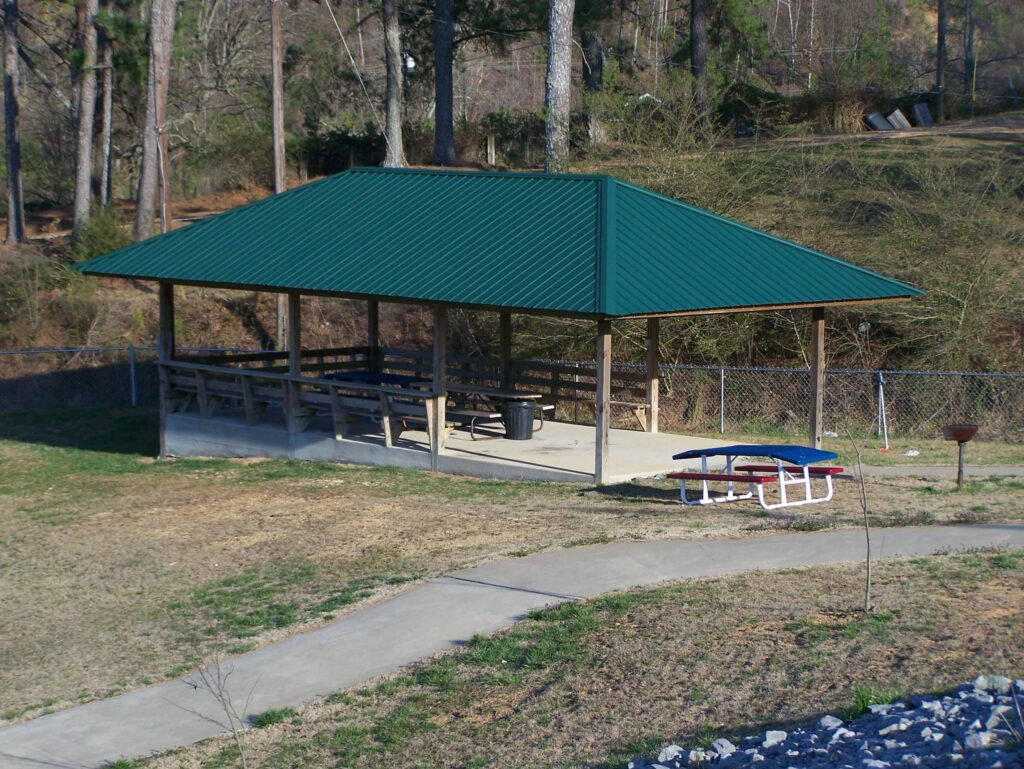
Another gap in the minutes does not state when Altoona received the grant or if it was fully funded. However, Mayor Joey Phillips gave an update on the park project in a June 1999 meeting. At that point the two pavilions (that presently stand today) were completed, as were lighting and water to the pavilions. Siberton Fence was contacted to give a price on tennis court fencing, and there were plans to paint the recreation building again.
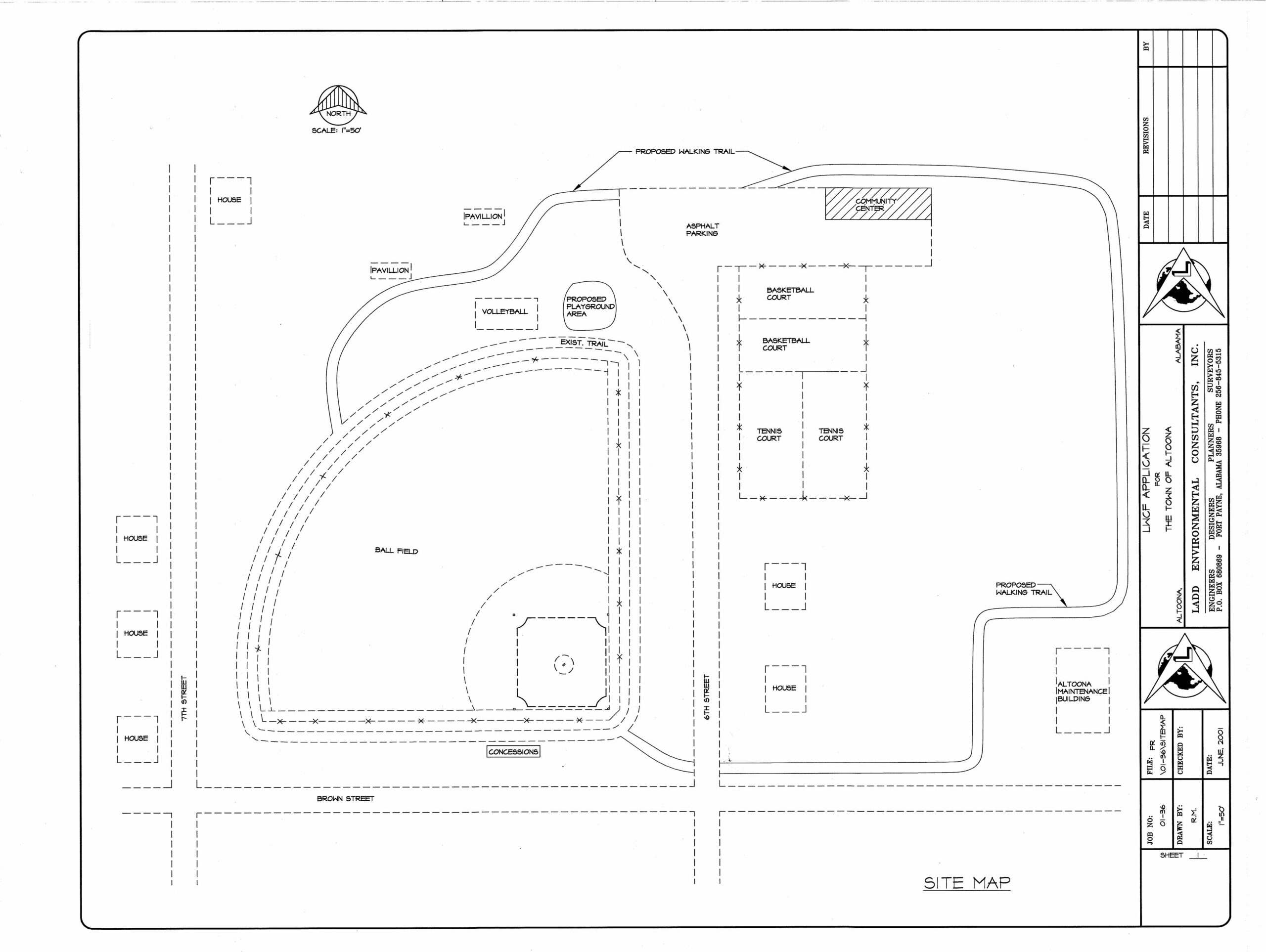
At some point the town also owned the gin buildings on 6th Avenue. In August 1999, Mayor Joey Phillips discussed applying for a grant from the Etowah County 1-cent sales tax fund to tear the buildings down and level the property for additional parking.[37] This plan never came to fruition. Ken Nix was employed to run the summer recreation program during the summer of 2000. The same year, West End Girls Softball returned to the field for both practice and games.[38] In 2001, Mayor Ronnie Blanton borrowed $28,000 from Exchange Bank to upgrade the park area and maintenance building. Minutes do not detail what percentage of the amount went to the park, or what was purchased for the park. An additional Land and Water Conservation fund project proposal from that time shows the intent to expand the walking track around the pavilions and behind the rec center, down behind the Water Board Maintenance building, and as a sidewalk next to Brown Street before connecting back into the main park area at the intersection of Brown and 6th Avenue.[39] Either by lack of funding or changing interests, the expansion of the walking trail was never implemented.
On November 24, 2001, a tornado hit Altoona. Among the multiple homes that were destroyed, there was also damage to the town park, including one of the pavilions which was destroyed by a tree. Fortunately, the pavilion damage was covered by FEMA funds, and was soon rebuilt. Over the course of the next few years, a new community center was built on Highway 132. Despite this, the mayor and council reaffirmed their commitment to the recreation building. They stipulated that the building should continue to be maintained, with its primary use for the children of the community.[40] However, improvements at the softball field and park continued.[41] Concrete pads were poured under the bleachers, and additional seating was added. A scoreboard was also installed.
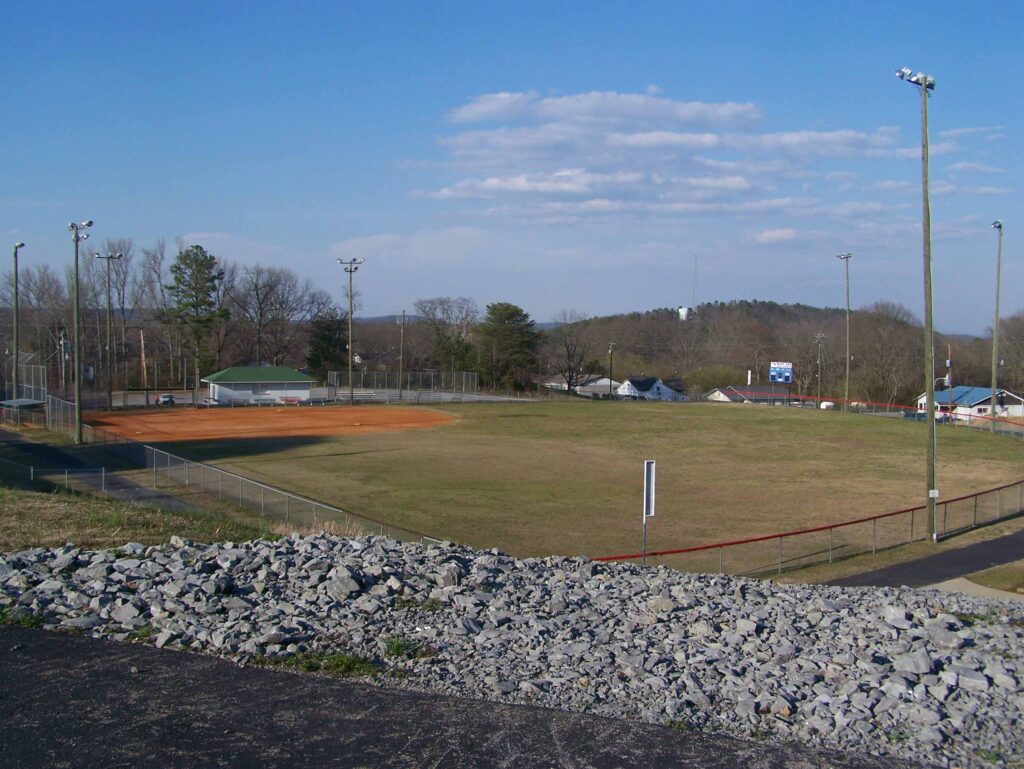
After the November 2001 tornado, an area was needed to put all natural debris from thought the community. A low-lying area between the recreational building and tennis/basketball courts was chosen. Over the next year this area was built up from these natural debris and fill dirt from other town projects. Mayor Ronnie Blanton voted to apply for CDBG funding to build an additional ballfield on this site. This grant was awarded on November 21, 2003, included funding for a 200-foot-long baseball field for children ages 5-12.[42]
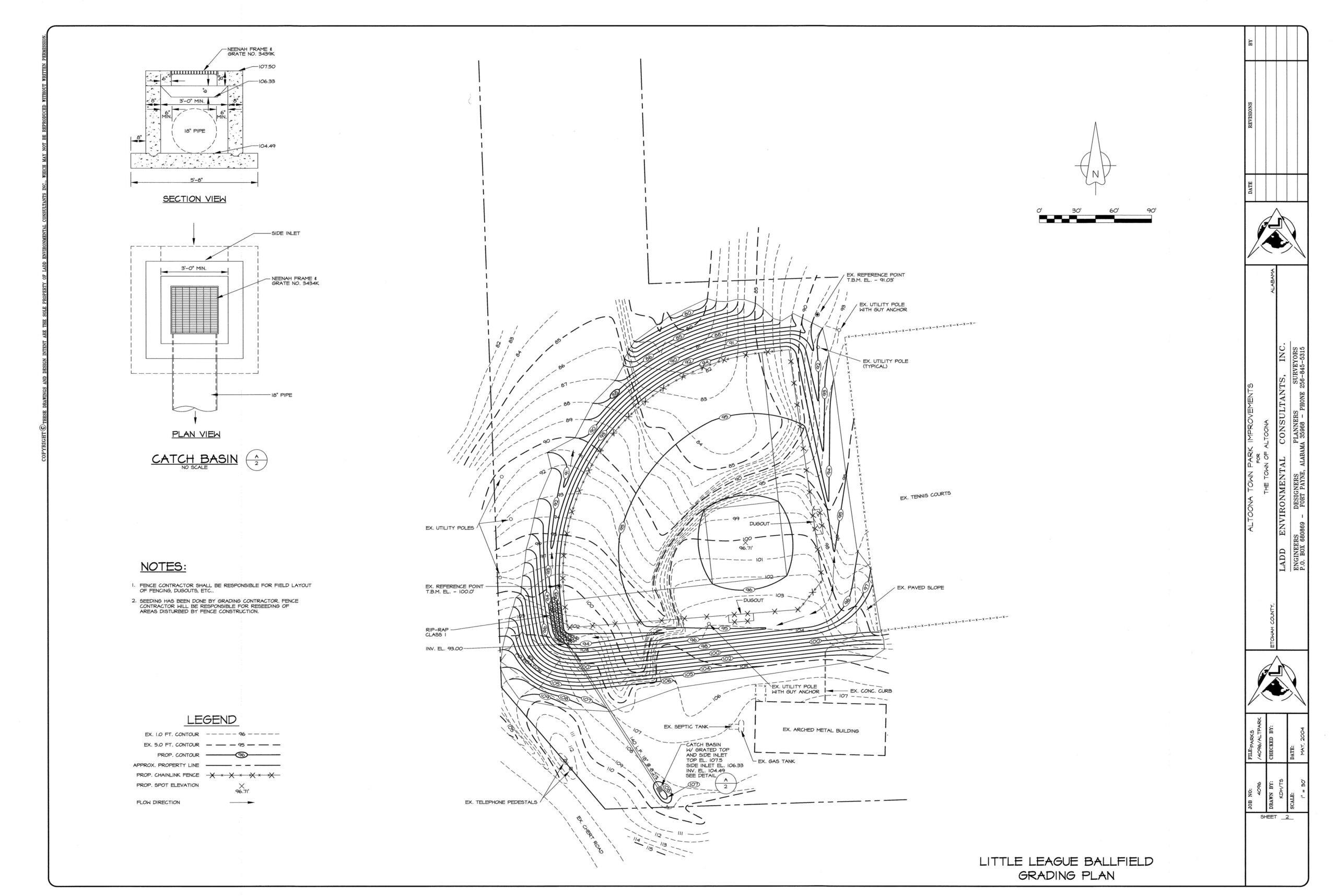
While this this field was completed under the new administration of Mayor Richard Nash in 2005, the recreation building portion of the original proposal was not included in the final project[43] Originally, the restrooms and stage in the recreation building were to be removed with a concession stand built into the area where the stage was located.[44] A new restroom area would be added into the middle of the building off the back side of the concession stand. Both the concession stand and corridor access to the restrooms would have been accessible through the rear of the recreation building.
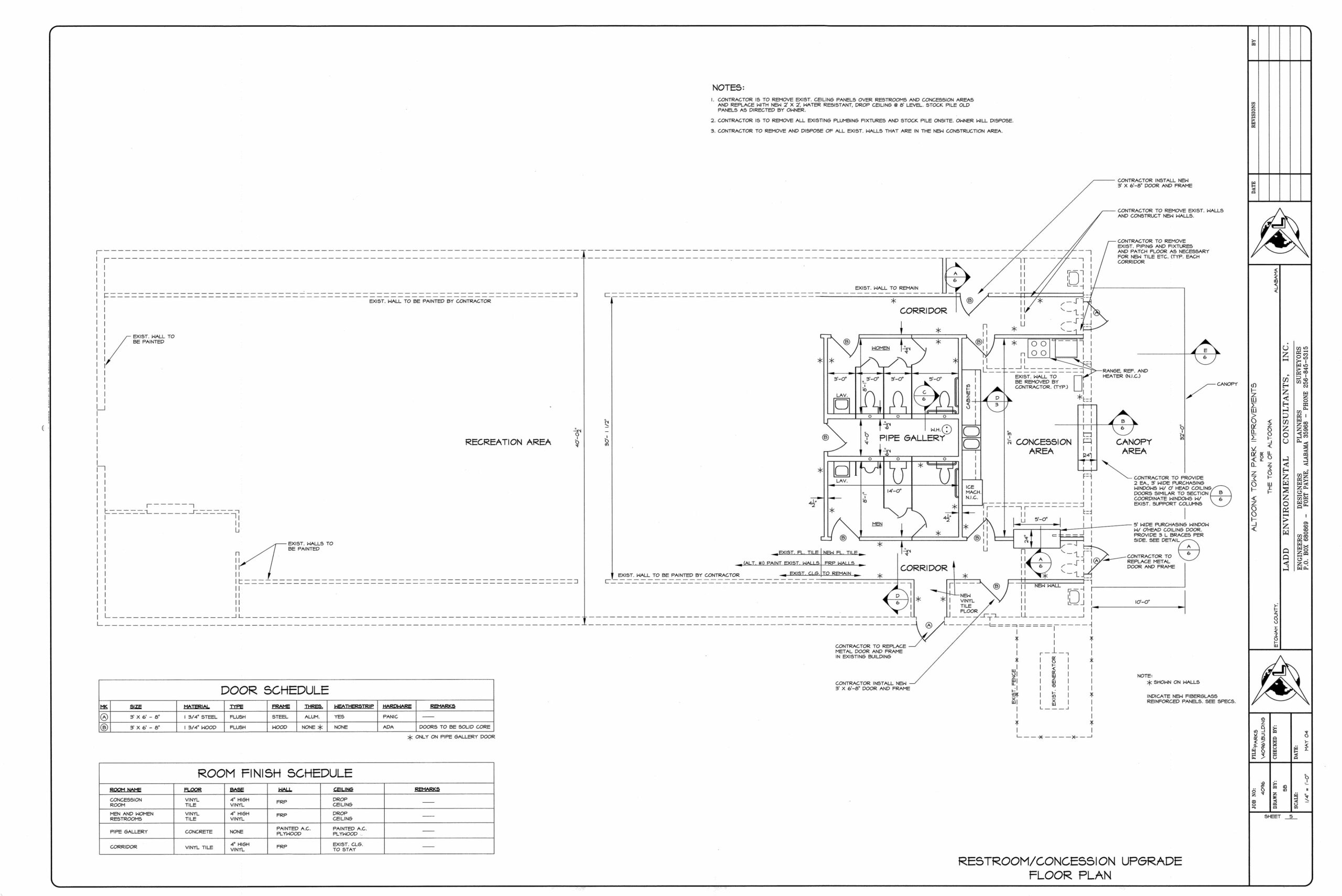
In addition to the new field, grants also paid for a batting cage at the old softball field, renovation of the recreation building concession area, and split rail fencing around at the top of the park. At the same time, the old football field house across the road from the lower softball field was torn down to expand the parking lot. Despite the improvements, West End Girls softball quit using the softball field for both practices and games.[45] On March 6, 2006, the town applied for an additional community development grant to purchase playground equipment for the park.
By late summer, with the park projects coming to an end, Mayor Nash made plans for a celebration at the park around the 4th of July (this celebration happened on June 24, 2006.) As a part of this, he asked for thoughts on naming the park. After discussion, Councilwoman Sue Cox proposed naming the park, H.D. Jenkins Park, after the town’s longtime doctor. Councilman Webb seconded the motion and the full council passed unanimously. Discussion then turned to naming other parts of the park such as the remaining fields, and recreation building. It was decided to hold off any further naming at that time.
In a February 2008 motion by Councilman Steve McCormick, the lower softball field was named in honor of Jack Ray, the late president of the Exchange Bank.[46] A few months later, in May 2008, Dr. H.D. Jenkins Park and Jack Ray field were the site of the first Altoona Day. A stage was placed in left field with pop up tents, inflatables, and vendor booths located in right field. At the end of the event the park was filled to the brim as Blackhawk performed. Future Altoona Days were held in downtown and over the course of the next decade, all interest and funding was shifted from the park and recreation building to the site of Brent Clifton Field. During this time, only general maintenance was performed at the park, such as replacing the basketball and tennis court nets, split rail fencing, and playground repairs.
Despite the towns focus shifted to the football field, the park and recreation building continued to be utilized by the community. Church and youth league softball continued the fields, and the recreation building was used for girl scouts and karate.[47] Unfortunately, age and the shift of resources to the football field began to catch up with the park and recreation building. Landscaping became overgrown, the basketball and tennis court surfaces deteriorated, the split rail fence began to rot, and the pavilions and playground became the target of vandalism. The recreation building fared even worse. At around 60-years old, the structure had been subject to numerous repairs over the years. The original tin was well covered by Kool Seal yet leaks continued to persist. As early as 2012, there was talk of using capital improvement funds to obtain quotes to fix the leaks.[48] Unfortunately, these plans were never carried out. As a result, by 2014, Mayor Nash requested that the council consider closing the recreation center due to age and repair cost.[49]
Despite the closure, interest in the building and park continued. In October 2016, councilman Dan Hopper expressed his interest in repairing the recreation building due to community interest in the park hosting ASA tournaments.[50] Chad Hall presented councilman Hopper with a list of upgrades necessary for the park to host the tournaments. This proposal kick-started renewed interest in the park and recreation building. By late-2016, the council discussed applying for an Etowah County community development grant to refurbish the recreation building and add lights to the upper softball field[51]
The grant was awarded, and by 2018, efforts to renew the park were underway. The bathrooms at the recreation building were gutted, a new glass door was installed.[52] The following month, discussion began on having an outside contractor complete the work on the building.[53] A rough estimate was given at $16,000. At that time, the council made the decision to try to complete as much of the work in house before relying on an outside contractor. With the arrival of warmer weather town employees began the work of sealing outside leaks. Soon thereafter, work was halted on the project due to employee turnover in the public works department. The project remained at a standstill for over two years.
[1] Altoona Resolution, October 6, 1972.
[2] Email from Jason Hardin. Park Projects, October 20, 2021.
[3] Alabama LWCF Catalog, Project No. 01-00140.
[4] Altoona Council Minutes, October 2, 1972.
[5] Altoona Council Minutes October 1, 1973.
[6] Altoona Council Minutes, June 4, 1973.
[7] Altoona Council Minutes, August 20, 1073.
[8] Altoona Council Minutes, September 17, 1973.
[9] Altoona Council Minutes, March 4, 1974.
[10] Altoona Council Minutes, June 17, 1974.
[11] Altoona Council Minutes, January 21, 1974.
[12] Altoona Council Minutes, August 5, 1974.
[13] Altoona Council Minutes, September 16, 1974.
[14] Altoona Council Minutes, November 18, 1974.
[15] Altoona Council Minutes, March 10, 1975.
[16] Altoona Resolution, June 2, 1975.
[17] Alabama LWCF Catalog, Project No. 01-00243.
[18] Altoona Council Minutes, Monday July 7, 1975.
[19] Altoona Council Minutes, February 2, 1976.
[20] Altoona Council Minutes, March 1, 1976.
[21] Altoona Council Minutes, July 19, 1977.
[22] Altoona Council Minutes, March 7, 1977.
[23] Altoona Council Minutes, February 22, 1977.
[24] Altoona Council Minutes, April 19, 1977.
[25] Altoona Council Minutes, June 6, 1977.
[26] Altoona Council Minutes, April 1, 1985.
[27] Alabama LWCF Catalog, Project No. 01-00600.
[28] Altoona Council Minutes, July 15, 1985.
[29] Altoona Council Minutes, October 21, 1985.
[30] Altoona Council Minutes, May 5, 1986.
[31] Altoona Council Minutes, January 19, 1987.
[32] Altoona Council Minutes, April 3, 1989.
[33] Altoona Council Minutes, April 15, 1991.
[34] Altoona Council Minutes, May 5, 1997.
[35] Altoona Council Minutes July 7, 1997.
[36] Altoona Council Minutes, September 14, 1998.
[37] Altoona Council Minutes, August 2, 1999.
[38] Altoona Council Minutes, March 6, 2000
[39] June 2001 LWCF Project 01-36 Altoona Park.pdf
[40] Altoona Council Minutes, April 3, 2003.
[41] Altoona Council Minutes, January 6, 2003.
[42] Press release from Governor Bob Riley’s Office among the Town Council Minutes.
[43] Altoona Council Minutes, April 3, 2006.
[44] May 2004 CDBG Project 4096 – Altoona Park
[45] Altoona Council Minutes, April 4, 2005.
[46] Altoona Council Minutes, February 7, 2008.
[47] Altoona Council Minutes, February 21, 2011, February 1, 2013.
[48] Altoona Council Minutes, July 20, 2012.
[49] Altoona Council Minutes, August 15, 2014.
[50] Altoona Council Minutes, October 20, 2016.
[51] Altoona Council Minutes, December 15, 2016, January 17, 2017.
[52] Altoona Council Minutes, February 13, 2018.
[53] Altoona Council Minutes, March 13, 2018.

Generally I do not learn post on blogs, however I would like to say that this write-up very pressured
me to try and do it! Your writing style has been amazed me.
Thank you, very great post.