The generational evolution of a sports and recreation facility
Part 1: From mining to football
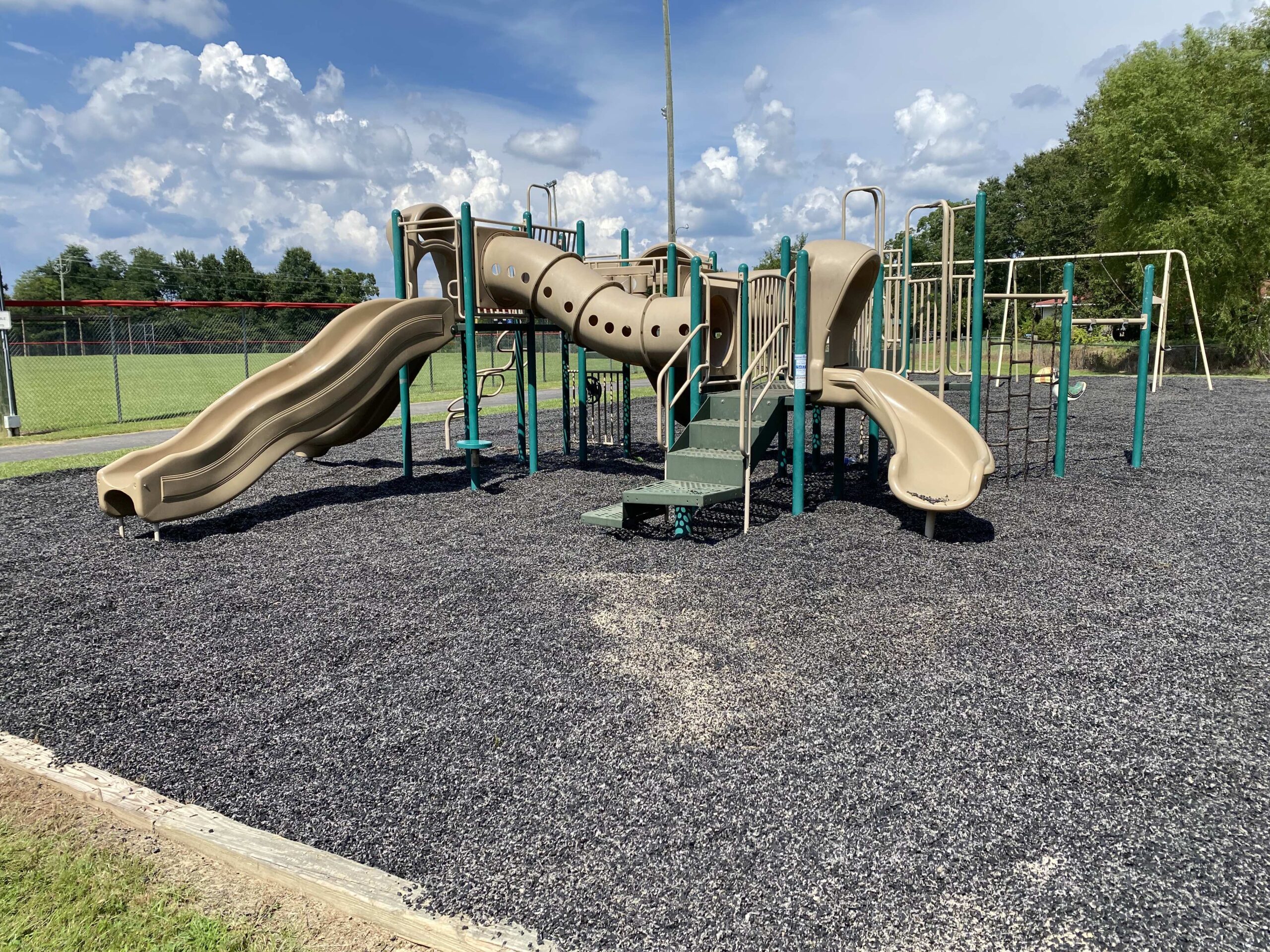
Recreation is a vital part of every community. From parks, and green-spaces, to trails, and athletic facilities, virtually every community offers its residents some sort of recreational outlet. While Altoona originated as a coal town, recreation was not left to the wayside. Early newspaper articles talk of picnics at Maynor Gap, plays at the schoolhouse, and dances throughout the community. Social gatherings, fraternal orders, and public speeches were also no stranger to the town. In 1923 when the school was built on the hill, plays and dances were hosted at the gymnasium. The area next to the school held a small playground, and a clearing off the backside of schoolhouse hill was home to the original football field.
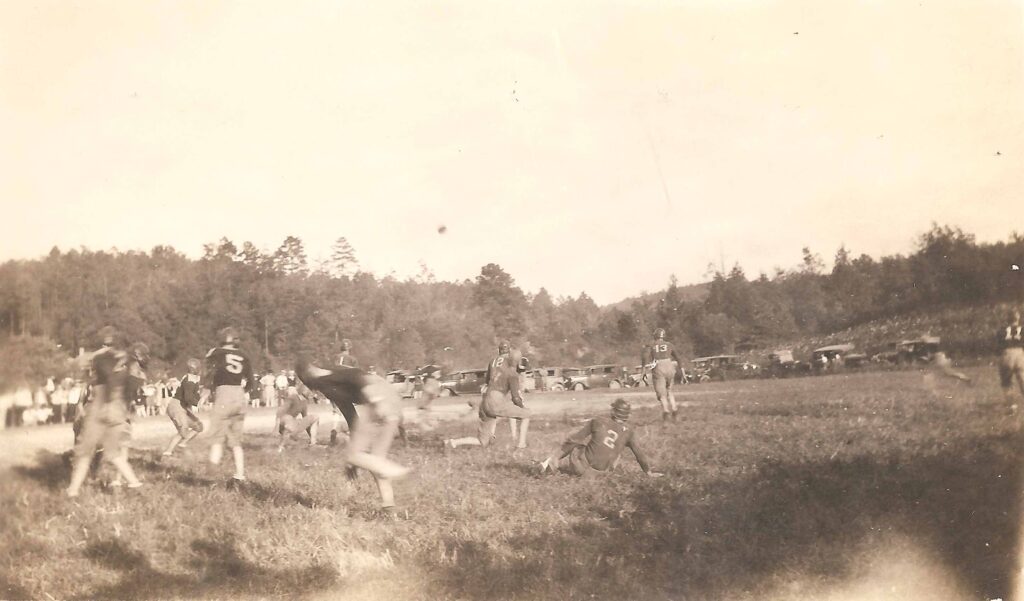
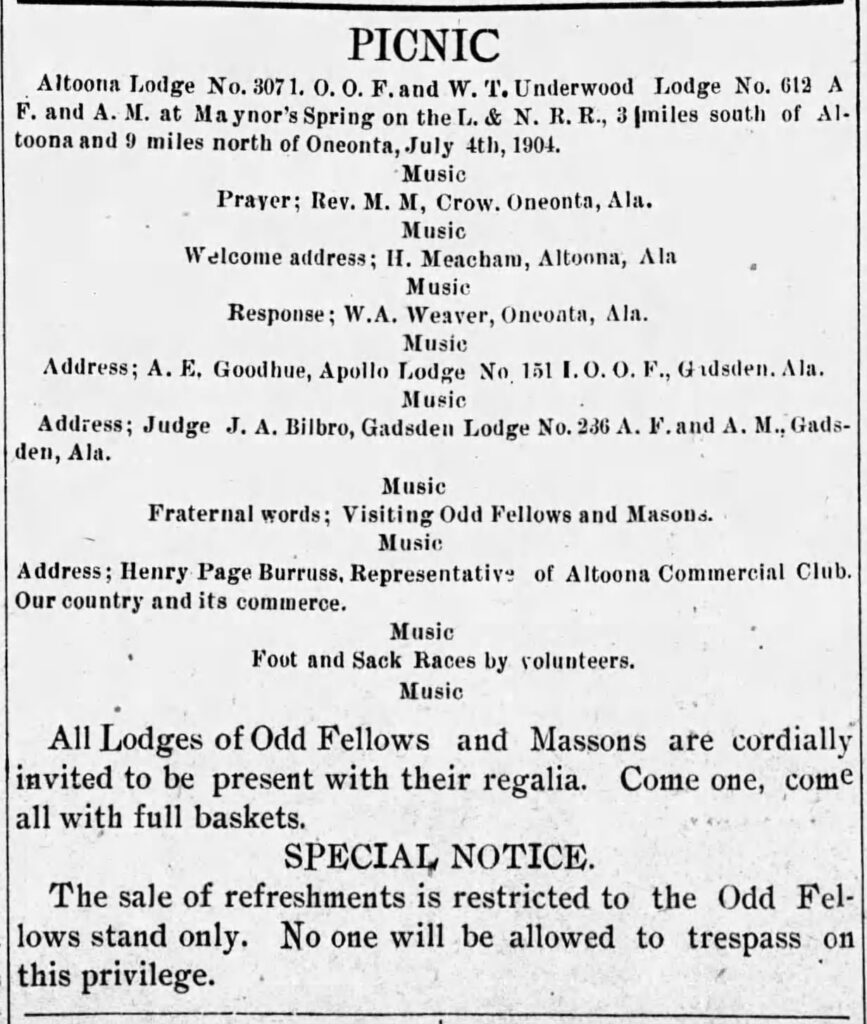
By the 1940s, Altoona has a tennis court and baseball field. The ballfield later became a football field, and the old football field was converted to a baseball field. The 1960s saw a transition of this new ballfield into a recreational center, which still stands today. Throughout the past 10 years, Altoona has added yet another football field, a community park and orchard and started on renovations and upgrades to its recreational center. This center, with its origins going back to the mining days is the centerpiece to Altoona’s parks. Its transition from baseball field to football field, to a recreational center has transcended generations of Altoonites.
The area that is the Rec Center, like most of Altoona traces its heritage back to the coal mines. Within the first decade of Altoona, the Rec center area was transformed from woods a clearing. Camp homes for the miner and their families were then erected. These homes first appear on the 1912 Map of Altoona. By 1928, the rec center area was vacant of all houses and structures. Unfortunately, the reasoning or exact timing of the removal of the homes during the 15-year period is unknown, as Gulf States Steel did not leave any record of their activities in town.
There is evidence that the cleared area was used for company picnics, field days, baseball, and public events. Senator William Bankhead utilized the area on a political visit to the town during this time. The area that compromised the parking lot across from the softball field was used as an area to park coal trucks. The spot where the rec building is situated was crisscrossed with trails and paths, apparently owing to the miners who walked to and from work each day. These paths and the shape of a baseball infield is clearly visible on the 1942 aerial photo of Altoona.
In retrospect, the use of the property during this time fit the needs of the community perfectly. Altoona’s origins were not carefully plotted and planned due to the coal boom. First and foremost was the need for housing for the immense workforce that was required. This is reflected on the 1912 map, in which the Rec Center area is dotted with camp homes. Altoona’s incorporation as a municipality and its longevity after the initial coal boom during the first decade of the 1900s led to added head of a recreation and social area for the residents. While Altoona was incorporated, the need was filled by Gulf State Steel the primary employer (and landowner) in the town. The decline and closure of the mines throughout the 1930s and 1940s ushered in yet another change for the area. The recreational center area was a part of this change and evolved to meet the changing needs of the community.
School & Football Use
In September 1929, Harry Brown took over as superintendent of the Altoona Mines.[1] Brown’s involvement in Altoona superseded more than his work at the mines. He played an active role in the community, serving as a councilman and overseeing the withdrawal of the Republic Steel Company from Altoona and the community’s transition from a coal town.
As a part of this transition, Brown obtained the coal property from Republic Steel. In October 1946, Brown purchased all the property north of the modern Brown Street between East Town and Tucker Mountain Road, including Altoona Mountain for $100.[2] A few months later, on April 17, 1947, Brown filed his proposed “Brown Subdivision to the Town of Altoona” with the Etowah County Probate Judge. The transition from mining property and company houses to a subdivision and the resulting sell of lots to individuals, marks the completion of the transition from a Coal Town.
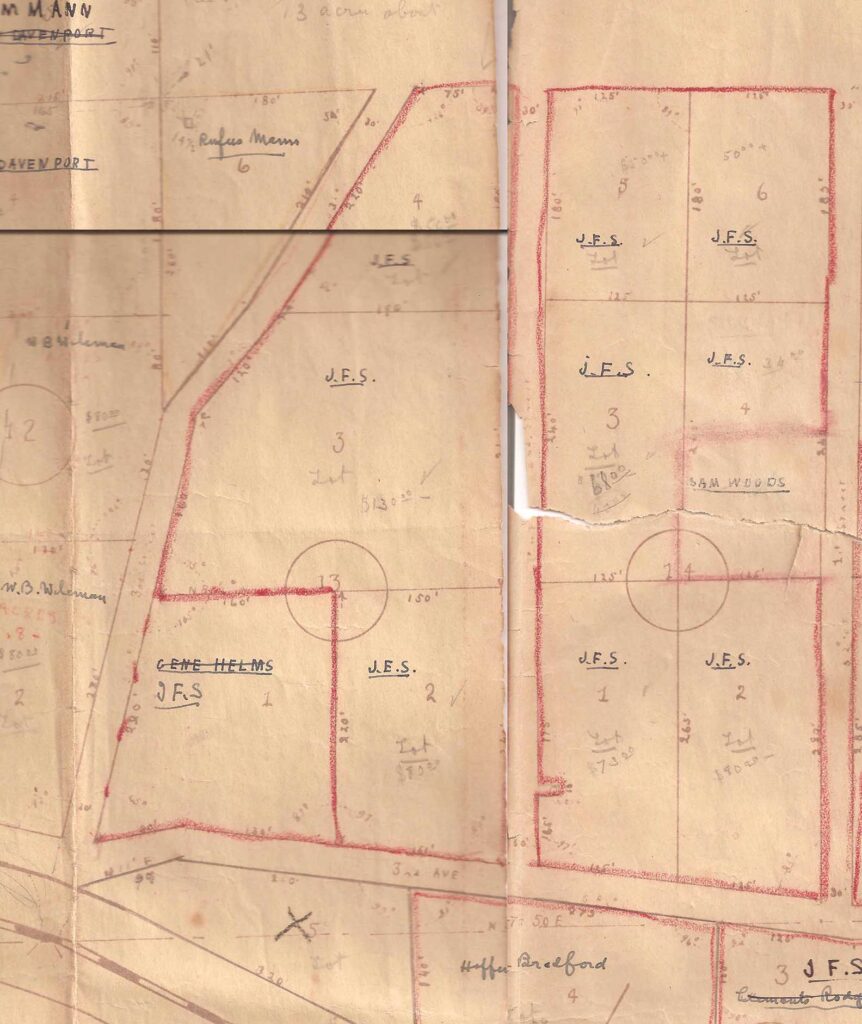
On January 4, 1949, and December 6, 1950, for the total sum of $3760, Harry Brown sold the future ball-field property to Frank and Ida Sullivan.[3] Just two years later, on September 20, 1952, the Sullivans sold the property to the Town of Altoona for $887. This property transfer was recorded retroactively at the October 6, 1952, town council meeting.[4] The minutes of the meeting record that J.D. Prince, chairman of the Altoona Athletic Committee asked the town to accept the deed to the football field. The motion to accept the deed for “a charitable purpose”, was made by councilman Harry Brown, and seconded by Alvis McAfee. The motion to accept the ownership of the field was unanimous.
There appears to be some discrepancy with calling the property a football field. At the time, football was played on the cleared area on Self Street, next to the Gibbs Livestock barn. At the point the town obtained ownership of the property, the area was not in playing condition. At some point during the Sullivans ownership of the property, a deal was made where the field was to be constructed. While a record of such a deal is not found, it is indicated by both December 1, 1952, council minutes in which it was discussed for the town to assist the county in grading of the “football field”.[5] There was substantial discussion on forming a committee to oversee the project, and in the end it was decided that a three person committee consisting of Mayor T.P. Bradford, Councilman Harry Brown, and Town Clerk Rex Phillips makeup the committee. Bradford was to act as chair, Brown as Topographical advisor, and Phillips was to record information for town records.
Over the course of the next few months progress on field construction crawled. No work was done in January. February’s report consisted of the need for “money to spend.” At the April meeting the town council discussed a Tax ordinance to fund parks & recreation, which would include funding for the ballfield. An update on the project stated that the field itself has been staked out and grading was proceeding at a good pace. The next update came on October 7, 1952, in which it was stated that the stadium seats had been painted and a pipe had been placed in the ditch near the corner of the ball field to make it easier to access the bleachers.
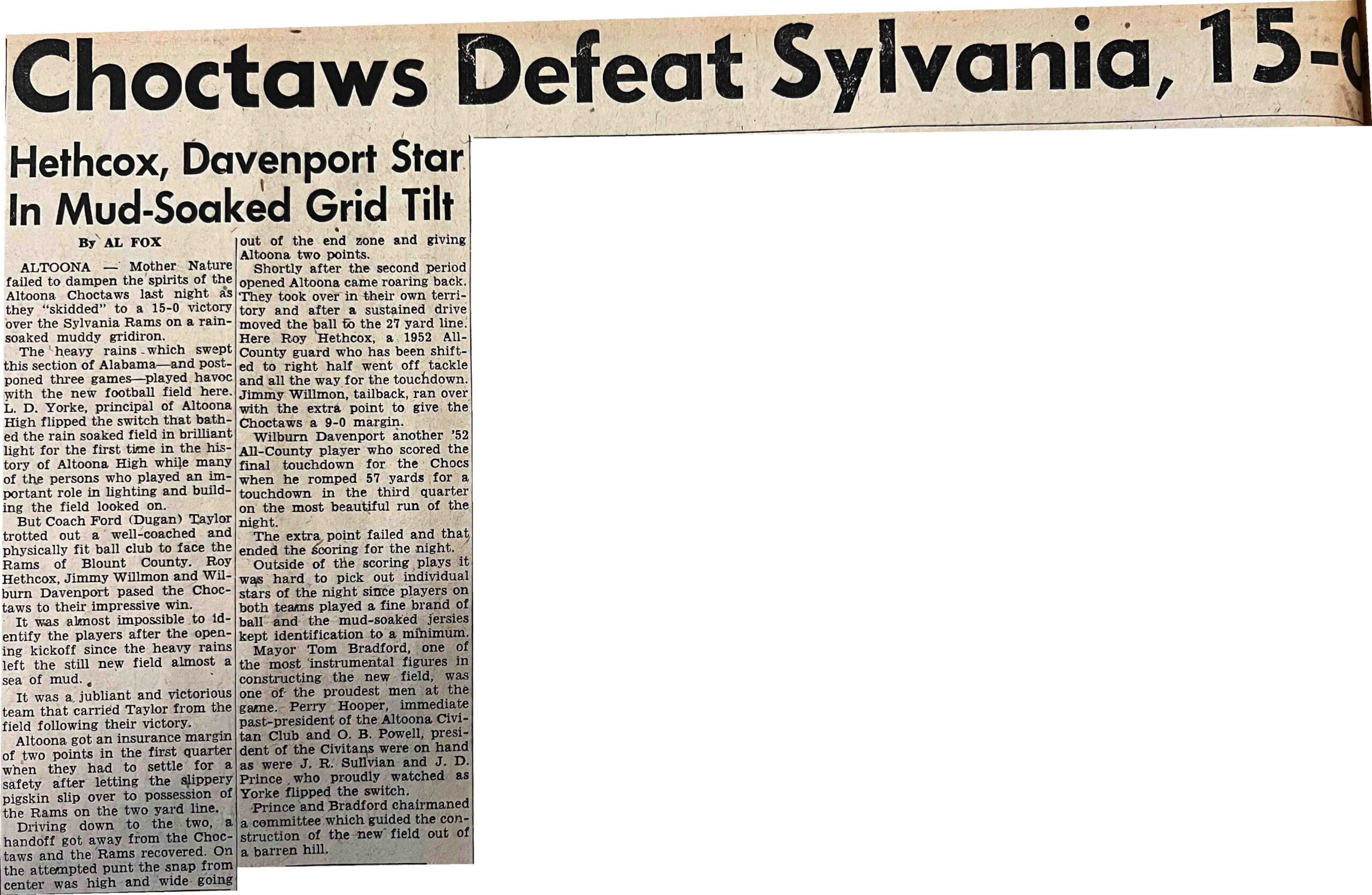
The first game was played on the new field on Friday, September 4, 1953, in which the Choctaws beat Sylvania 15-0.[6] In fact, the Choctaws were undefeated at home the entire year. While there was no discussion regarding field lights, the 1954 Pow-Wow annual shows the football team on the field with lighting in the background.[7] While the field was utilized, there was still no space for the players and coached to shower and congregate before, during, and after the game.
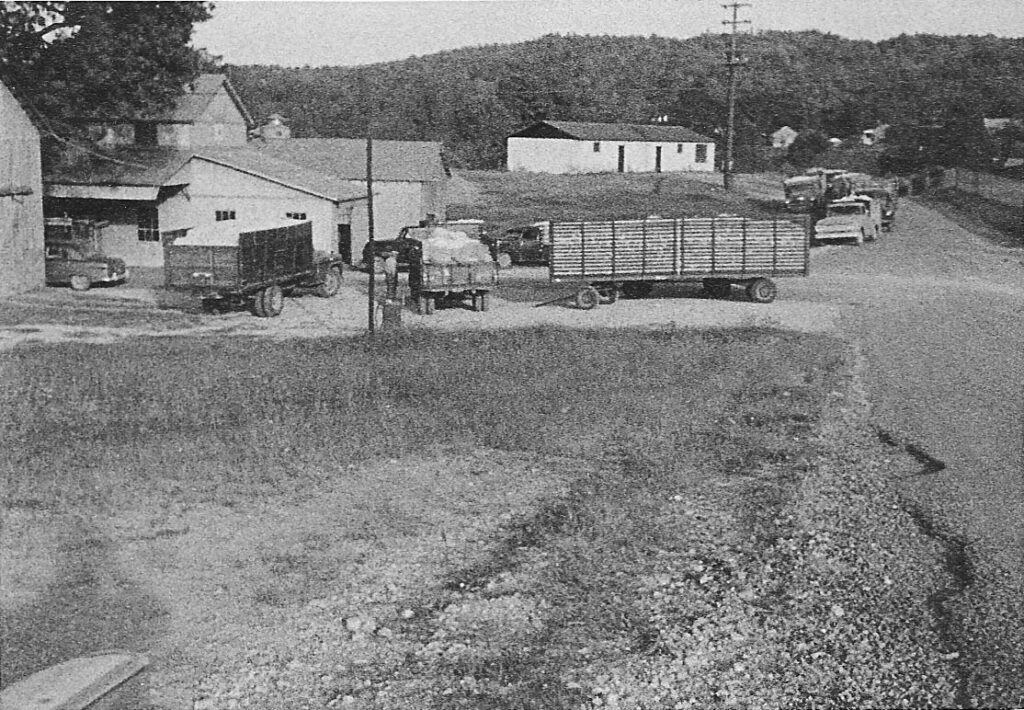
At the October 7, 1953, council meeting it was discussed purchasing the Harry Brown property across from the football field which included a pole and guide wire. Councilman M.H. Thompson suggested that the town work out a deal with Brown to purchase lot to utilize as a bathhouse. The purchase of the property was tabled until January 4, 1954, when Councilman Thompson made a motion to purchase the lot for $300. The motion was seconded by Councilman Clifton and passed unanimously.[8]
On January 4, 1954, the town sold the football field property to the Etowah County Board of Education for $900.[9] Less than a month later, on February 1, 1954, the town also sold the field house lot to the Etowah County Board of Education.[10] It is unclear why the town sold the property to the board of education. In fact, the minutes do not mention the sale of the property at all. The January 4, 1954, minutes state that Councilman Thompson made the motion to purchase Harry Browns bathhouse lot, with a second by Councilman Clifton and all in favor. The margins not this motion as ordinance 106. However, ordinance 106 records to town’s desire to transfer the ball-field property to the Board of Education, not the purchase of the Brown lot.
Despite the sale of the property to the board of education the town continued to support field construction and maintenance. The following month, the minutes record that Councilman Thompson asked for the field to be treated with soda.[11] He also suggested that fence construction along the north end of the property be delayed. The June meeting included a lengthy discussion on the construction of the field house.[12] The council agreed to continue to contact Superintendent of Education J.O. Dickinson until the construction was “substantially begun.” The delayed fence construction was finally authorized in July 1954.[13]The 6ft. High fence was to be built along the north end of the field with a 10-foot gate near the east end of the fence and a walk-in gate even with the north goal posts.
During this time, there was no progress in the construction of the field house. September minutes record, “want to see bath house built.” By October the mood has worsened with the minutes stating, “More of the same. Get things done now.” Apparently, construction has started by November as the recreation committee has nothing to report and by December the recreation report was turned into a discussion of industrial needs of the town.
The town hoped to expanding seating in 1955. However, on April 6, 1955, a tornado struck Altoona and destroyed the new field house.[14] On April 11, 1955, Councilman Thompson reported that the $7,000 structure would be rebuilt.[15]

[1] Gulfsteel, October 1928, Mel Trammel (Altoona Reporter) Alabama City, Alabama. Hooke Library and Museum University of Alabama.
[2] Etowah County Deed Book 7-L, Page 562.
[3] Etowah County Deed Book 516, Page 391.
[4] Altoona Council Minute Book 1948-1956, minutes of October 6, 1952, meeting.
[5] Altoona Council Minute Book 1948-1956, minutes of December 1, 1952, meeting.
[6] Alabama High School Football Historical Society, www.ahsfhs.org/Teams2/gamesbyyear.asp?year=1953&Team=Altoona
[7] 1954 Pow-Wow Annual. Copy in possession of the author.
[8] Altoona Council Minute Book 1948-1956, minutes of January 4, 1954, meeting.
[9] Etowah County Deed Book 559, Page 53.
[10] Town of Altoona Ordinance #107, Ordinance Book at Altoona Town Hall.
[11] Altoona Council Minute Book 1948-1956, minutes of March 11, 1954, meeting.
[12] Altoona Council Minute Book 1948-1956, minutes of June 7, 1954, meeting.
[13] Altoona Council Minute Book 1948-1956, minutes of July 12, 1954, meeting.
[14] The Gadsden Times, April 7, 1955.
[15] Altoona Council Minute Book 1948-1956, minutes of April 11, 1955, meeting.

Be First to Comment