A story that has been visited several times over the years is that of the ancient graveyard that was unearthed during the flood of 1886. The main crux of the tale is that of a 12-foot giant discovered among the remains. This story appeared during Will I. Martin’s articles in the Gadsden Times and was retold more recently in the writings of Mike Goodson and Danny Crownover, within Gadsden Times and Messenger[1] The story of the Whorton Bend Giant has also found a larger audience both within book form and the internet.[2] While this piece will include a retelling of the story, it also serves a purpose to dig deeper, and explain exactly what was found in 1886.
Is there a historical basis for Homo species of giants? Biblically, giants are mentioned several times. The first in Genesis 6:4: “There were giants on the earth in those days, and also afterward, when the sons of God came in to the daughters of men and they bore children to them. Those were the mighty men who were of old, men of renown.” Amos 2:9-10, also provides insights into giants: “Yet it was I who destroyed the Amorite before them, whose height was like the height of the cedars, and he was as strong as the oaks; yet I destroyed his fruit above and his roots beneath. Also, it was I who brought you up from the land of Egypt, and led you forty years through the wilderness, to possess the land of the Amorite.” Both verses speak of giants, without giving much detail in stature or strength.
While the versed in Amos speaks of men the height of cedars, it continues continues using the tree descriptions with oak, fruits, and roots, thus making the comparison almost fanciful. Likewise, 1 Chronicles 11:23 describes an “Egyptian, a man of great height, five cubits tall.” While the word giant is not specifically used, it’s notable that his height translates to 7’5”. The most famous giant within the Bible is Goliath, who stood at “six cubits and a span”. Most English translations interpret this as being 9’9” tall, with the NET Bible putting him at 7’. Was Goliath average height for the giants mentioned in the Bible? Without further details, that is unknown.

Giants also appear in other sources within ancient world. Greek and Roman mythology speaks of Titans, Cyclops, and other giants. The Norse had frost giants, and the Native American tribes spoke of giants who were three times the size of the common man.[3] An Egyptian document, Anastasi Papyrus, describes a race called Shasi between 6’8” and 8’6”.[4] Undoubtedly, many of these stories contain exaggerations of the giants’ prodigious height and strength. However, is it reasonable to automatically reject every one of these traditions? Or, like tales of dragons, is there possibly some truth behind the legends, as is often the case? It is interesting that much of giant lore includes descriptions of a flood sent by God (or the gods) to destroy these wicked people.
Is there evidence for giants in modern times? Hernando de Soto, in his journey in the southeast, described men half-a-yard taller than his tallest man.[5] Smithsonian scientists identified at least 17 skeletons that stood at over seven feet in their annual reports, including one example that was 8 feet tall. These reports also included a skull with a 36-inch circumference reported from Anna, Illinois in the Smithsonian Annual Report of 1873, (an average human skull is about 20 inches in circumference).[6] However, presently none of those skeletons are known to currently exist within the Smithsonian’s holdings. While 20th century reports are rare, a 1933 article from Louisiana describes skeletons measuring at 7ft tall.[7] Another 1936 bulletin by G.I. Groves of the North American Indian Relic Collectors’ Association, tells of an interesting excavation at the Spiro Mounds of Oklahoma: “Of the skeletal material, only four or five good specimens were found. One remarkable mummy was 8-1/2 feet in length. He had been cremated to such an extent that the flesh was charred and remained in that condition throughout the ages.” In all the previous cases, the heights are well below that of what was discovered in Whorton Bend.
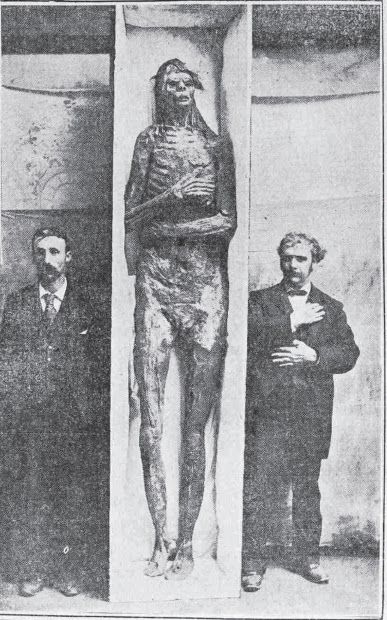
The debate among scientists and skeptics regarding giants in the ancient world is at an all-time high. Authors such as Graham Hancock and shows such as the History Channel’s, In Search of Giants have brought the subject into the 21st century. However, while the debate on whether the ancient population had individuals of 7- and 8-feet height is under question among skeptics, the issue of a height about 8 feet is almost entirely nonexistent.
Dr. Greg Little writes, “In essence, what is shown in the book is that there were a lot of skeletons found that reached nearly 8 feet in height, but there was nothing found that clearly showed any skeletons over that height. It’s possible of course, but the evidence is lacking.” [8] While Little does not completely rule out the possibility, he and others do not subscribe to the idea of a population over that height. While this casts doubt on the authenticity of the Whorton Bend Giant, a closer examination and dissection of the original sources is necessary.
The story of the Whorton Bend Giant first appeared in the Gadsden Times:[9] “On April 12, 1886, James R. Henry, the colonel’s son, went down to the farm and found nearly the entire river bottom land had been washed away by the flood. The topsoil had been swept away to a depth of 3 or4 feet, and of the entire 250 acres, only about 40 or 50 acres were then capable of producing a crop. Upon closer examination, a startling discovery was made. Henry discovered a large portion of the land had once been used as a burial place for the dead of an unusual race of people. The burial ground covered about 40 acres, and many curious things were found that had been buried with the dead. At the head of every grave, a pot of earthenware was found, and many contained the ornaments and weapons of war worn by the departed in his lifetime. Knives, tomahawks, pipes and other items were found and collected by Henry, who also found a skeleton that would prove to be the most startling find of the day. The skeleton appeared to be that of a giant. Henry could easily place his head in its skull, and the bone was a half-inch thick. The thigh bone was almost 22 inches in length, and the bone from the shoulder to the elbow measured 20 inches. When all the bones were placed in their proper positions, they showed the owner must have been close to 12 feet tall from the top of his head to the bottom of his feet. Two or three of these enormous skeletons were found in this strange burial site. Many of these people buried here were from a prehistoric race. The skulls found here were of solid bone, flat on the top with no seam, as found in modern man. This lead many to believe Etowah County was once inhabited by an entirely different race of people. The unearthing of this burial ground caused considerable excitement. Henry preserved many of these artifacts for people to see.”
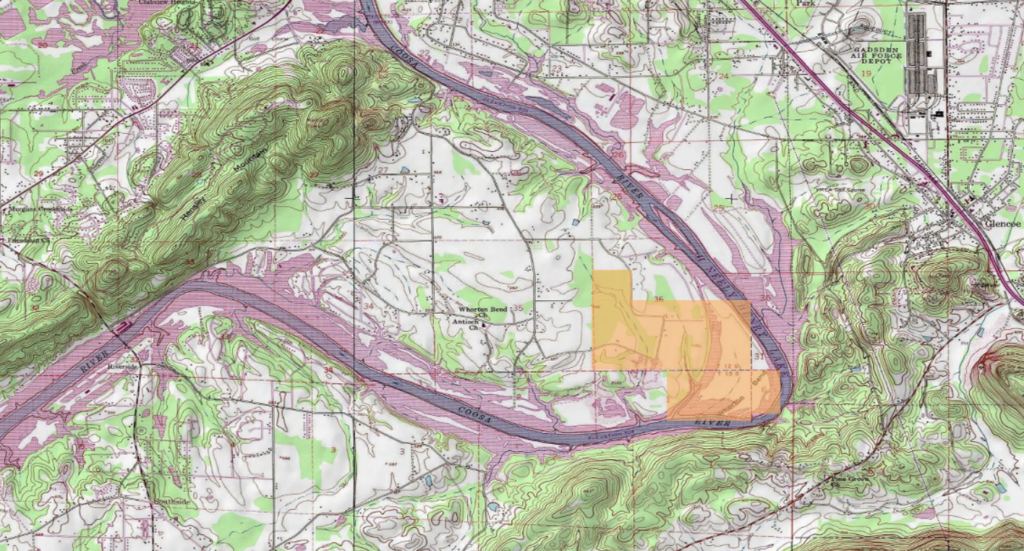
A second version of the story was picked up by wire reports around the state:[10] “The flood recently unearthed a great many relics of former civilization at several points along the riverbanks, but especially on the Green Foster place above and Col. Sam Henry’s place in the Whorton bend. Mr. James Henry who examined some of these curiosities on his father’s place, told us that some of the bones of the human skeletons found were of very unusual proportions, indicating a larger stature than is now attained by the genus homo.”
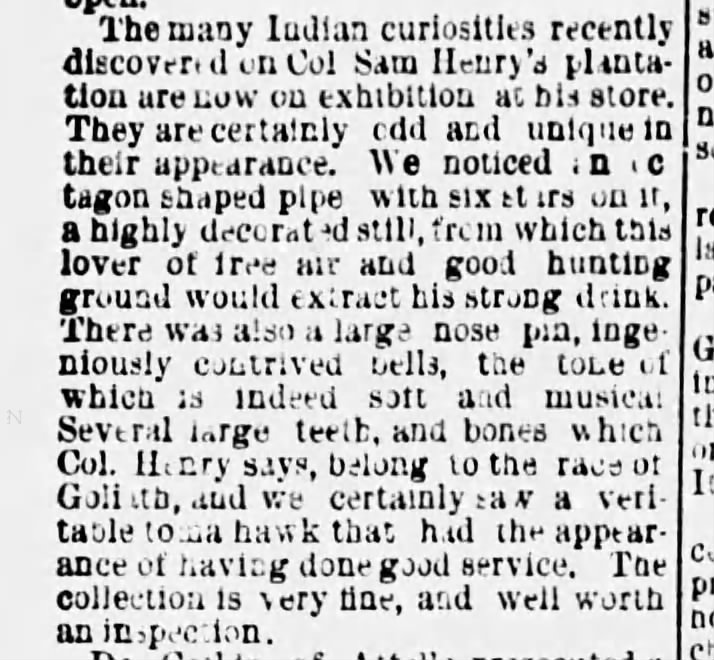
The final version of the story is found in the Montgomery Advertiser:[11] “The many Indian curiosities recently discovered on Col. Sam Henrys plantation are now on exhibition at his store. They are certainly odd and unique in their appearance. We noticed an octogen shaped pipe with six stars on it, a highly decorated still, from which this lover of free air and good hunting ground would extract his strong drink. There was also a large nose pin, ingeniously contrived bells, the tone of which is indeed soft and musical. Several large teeth, and boned which Col. Henry says, belong to the race of Goliath, and we certainly saw a venerable tomahawk that had the appearance of having done good service. The collection is very fine, and well worth an inspection.”
While it appears that only three original sources exist, there are some later articles with firsthand accounts that continue to story. Will I Martin writes:[12] “Mr. Whitworth recalled the great flood of 1886 when the Coosa reached the highest stage in its history. He remembers that when the flood was at its height it washed up and Indian graveyard on the Sam Henry farm in Whorton Bend and that many relics were put on display in a downtown store. The articles that impressed him most were the human bones and he recalled that one skeleton was believed to have been that of a venerable giant. Some estimated that the skeleton was that of a man 12-feet tall. Mr. Whitfield was a 16-year-old boy at the time. This writer (Will I Martin) recalls that exhibit. It contained the largest number of Indian relics ever seen here.” In a later article, Martin states:[13] “…and these relics, I have been told, are still in the possession of the Rogers family, a branch of the Henry family.”
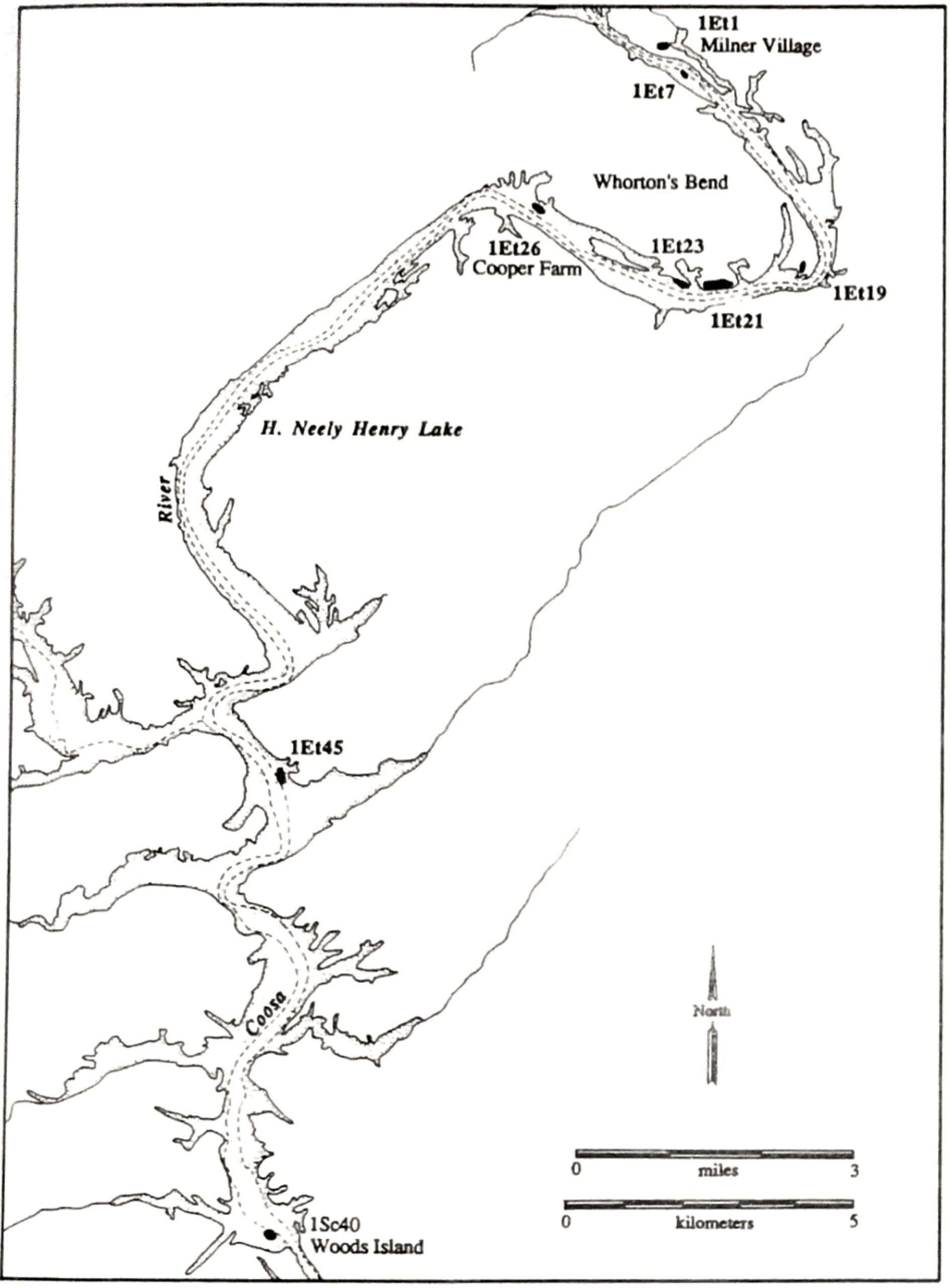
The artifacts and burials themselves are not unusual in any way. Roughly three miles north of Henry’s Land. is another well documented site known as Milner’s Village (1Et1). The Milner Site was first excavated by David DeJarnette and Steve Wimberly in 1948. The site, measuring 6.8 acres, was dated from 1630-1670, and contained a total of eight burials. These burials were accompanied with projectile points, pots, pipes, glass beads, collars, arm bands, bells, other brass objects, axes, awls, and an iron knife. When comparing the burials and accompaniments of the Milner Site with that of the Whorton Bend description, the two match almost perfectly. The Whorton Bend description of ornaments and weapons of war, including tomahawks and knives can be visualized in the objects from the Milner Site.
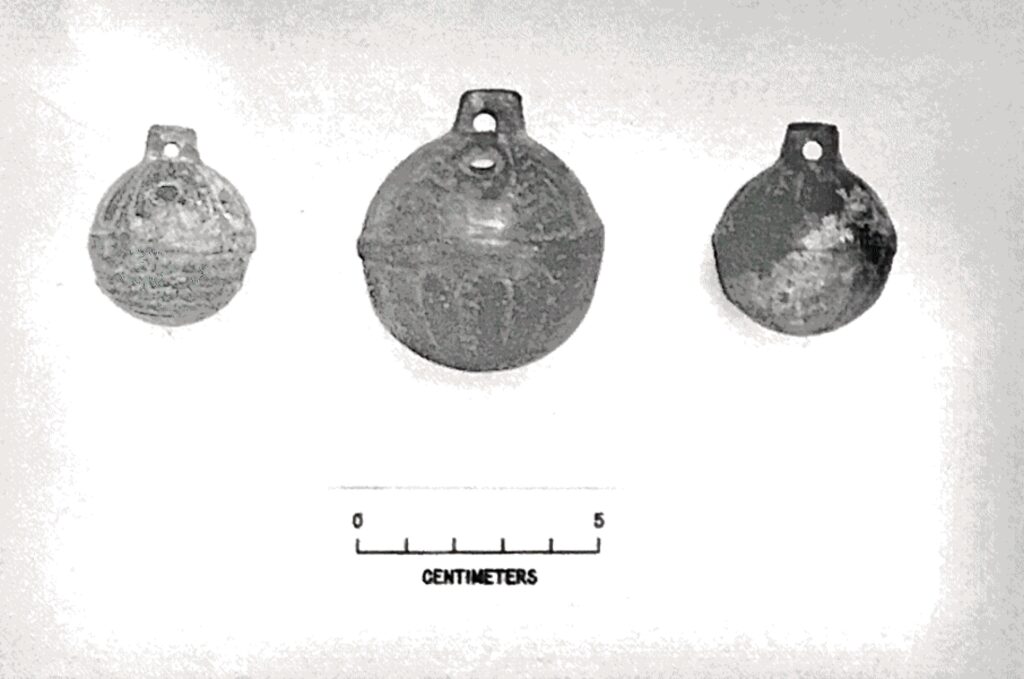
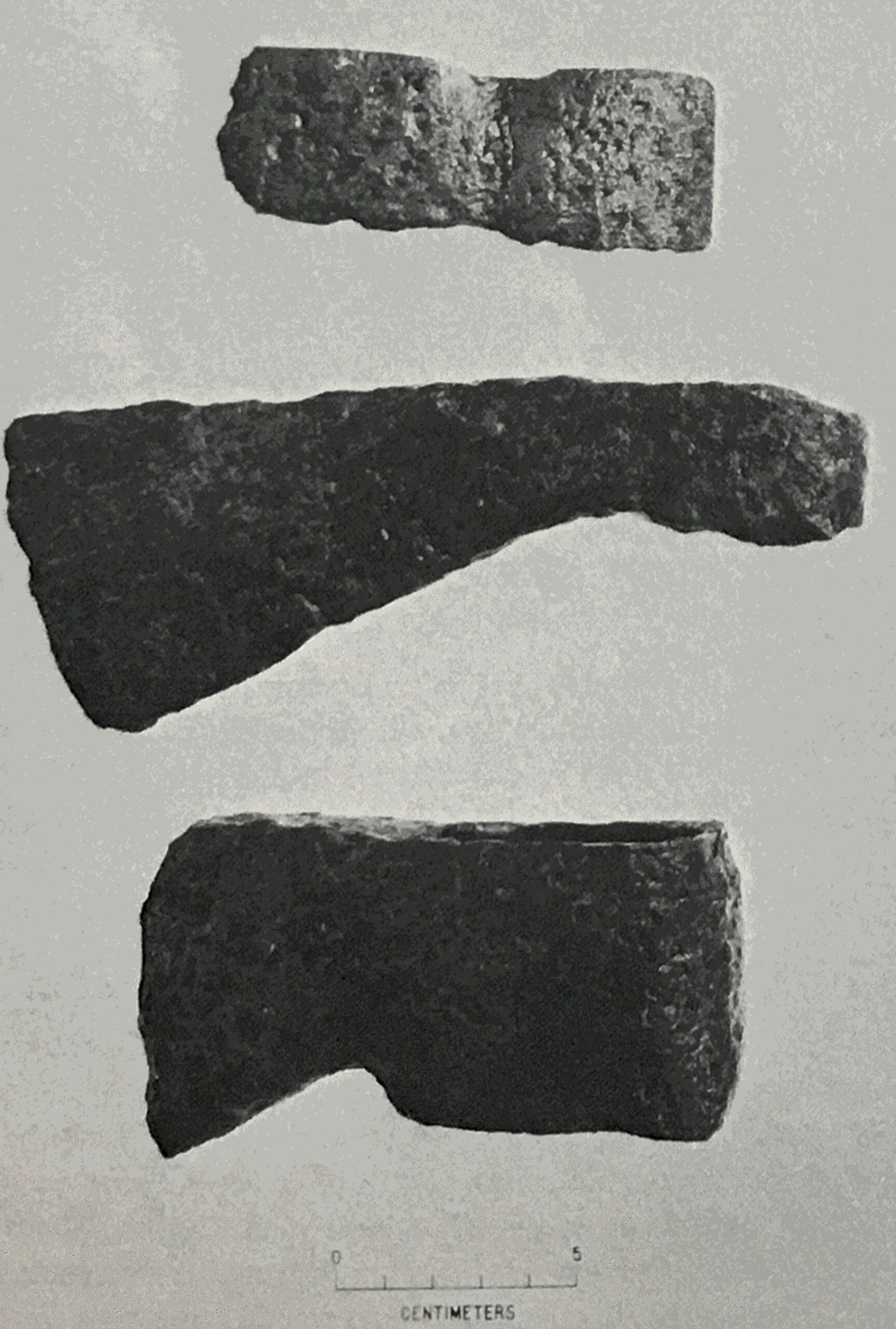
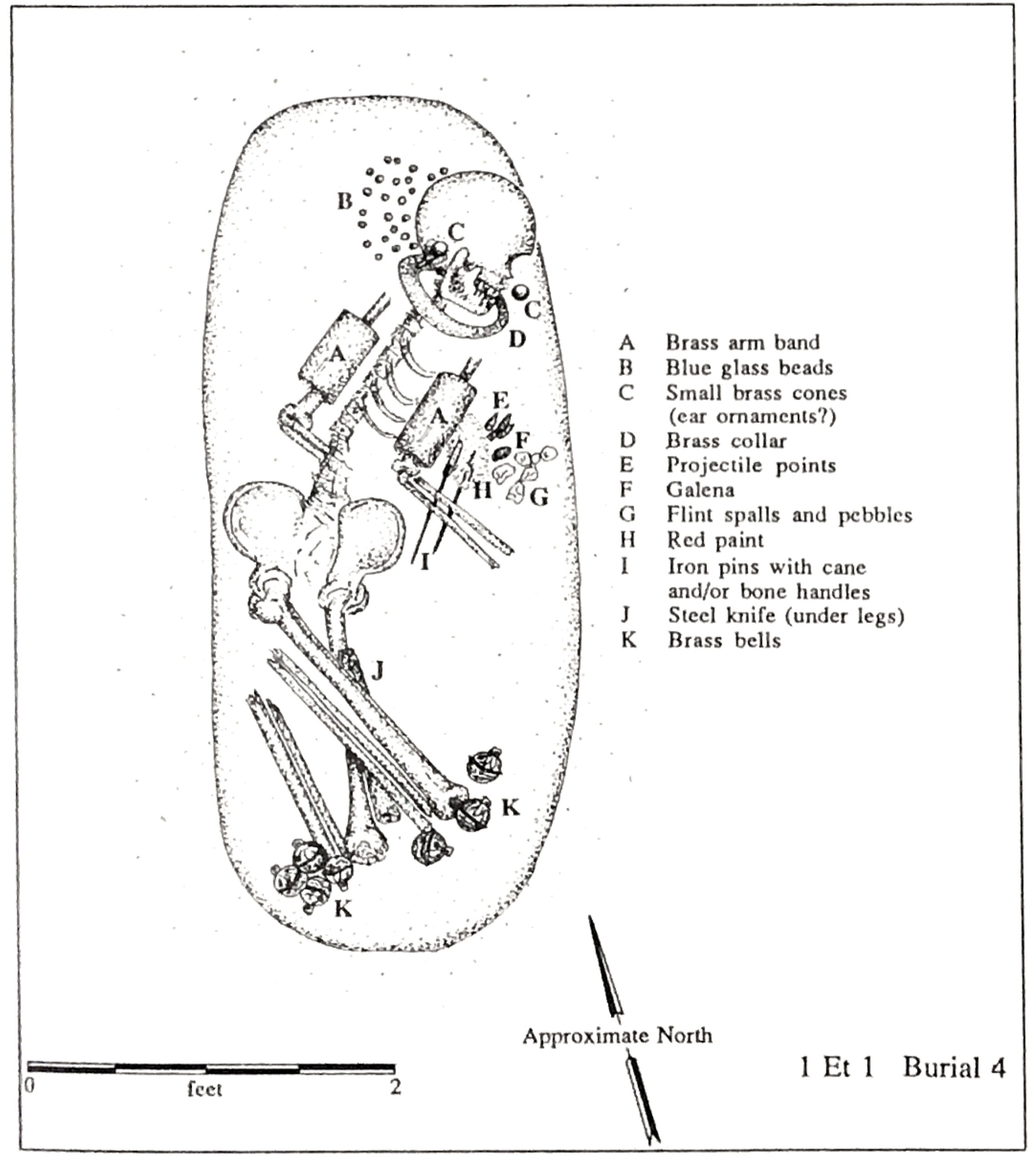
The focus of the original Whorton Bend article is the description of the skeleton, which when assembled was estimated as being an individual with a height of 12 feet. Could local farmers and businessmen in the 19th century accurately reposition the bones of an individual into an accurate skeleton? It’s probable, but reassembly of a skeleton is not an accurate way to judge height. In modern times Forensic anthropologists estimate a person’s height from the lengths of various bones that are found. The functions they use are determined based on studies in which thousands of people have been measured. The Gadsden Times description contains two key measurements that: a thigh bone (femur) 22 inches in length and a bone from the shoulder to the elbow (humerus) measuring 20 inches. Using the formula applied to the femur the height of the individual is estimated at 6’4″.[14] The humerus measurement yields an estimated height of 7’3″. The average of the two heights comes to 6’7″.[15] Unfortunately, this is almost half the size of the reported 12-foot height. Despite this, even by today’s standards the individual was quite tall.
[1] Martin, Will I, Gadsden Times, April 12, 1948, January 25, 1949, May 8, 1952, and October 19, 1952. Goodson, Mike. “Floods Reveal Burying Grounds,” The Gadsden Times, July 16, 2002. Crownover, Danny. “Strange Happenings Around Etowah County,” The Messenger, October 5, 2015.
[2] Zimmerman, Fritz. “The Encyclopedia of Giants in North America.” 2015. P.359-360
[3] http://www.usgennet.org/usa/topic/preservation/bios/chpt19.htm
[4] http://www.biblearchaeology.org/post/2015/02/27/Egyptian-War-Correspondents-and-the-Biblical-Giants.aspx
[5] http://www.theepochtimes.com/n3/1150852-did-giants-exist-part-1-legends-and-americas-giant-skeletons/
[6] http://www.ancient-origins.net/unexplained-phenomena/top-ten-giant-discoveries-north-america-005196
[7] Sarasota Herald-Tribune, June 28, 1933. https://news.google.com/newspapers?id=nh8hAAAAIBAJ&sjid=SWQEAAAAIBAJ&pg=2617,2449820&dq=en&hl=en
[8] Little, Dr. Greg. “The truth about giant skeletons in the American Indian mounds, and the Smithsonian cover-up.” AP Magazine, June 28, 2014
[9] The Gadsden Times, July 16, 1886.
[10] Birmingham Post-Herald, April 25, 1886, P.3.
[11] “Gadsden,” The Montgomery Advertiser, April 25, 1886, P.2.
[12] Martin, Will I. “A Veteran Teacher-Other Recollections.” The Gadsden Times, April 12, 1948.
[13] Martin, Will I. The Gadsden Times, October 19, 1952.
[14]https://bio.libretexts.org/Learning_Objects/Worksheets/Book%3A_The_Biology_Corner_(Worksheets)/Anatomy_Worksheets/Investigation%3A_Can_You_Estimate_a_Person%E2%80%99s_Height_from_the_Length_of_their_Bones%3F
[15] Unfortunately, it’s not known if the remains were male or female.

Be First to Comment